

Selling a home already feels stressful. A long solar contract can add more pressure. Many homeowners struggle when they try to relocate.
A solar lease often lasts 20 to 25 years. That contract does not disappear when you move. Buyers may hesitate to accept the monthly payments.
Some homeowners feel trapped by the agreement. Others worry the lease may delay the sale. Understanding your options can help protect the deal.
This guide explains how to cancel a solar lease when moving house. It also covers options for solar leases when moving house. You will learn about transfers, buyouts, and legal exit paths.
The goal is simple. Help you protect your home sale and your finances.
What Happens to a Solar Lease When Moving House
A solar lease is a contract between you and the solar company. The company owns the panels. You pay monthly to use the power they produce.
When you sell your home, the lease stays tied to the property. It does not transfer to your new address. You must handle it before closing.
You usually have three main options:
- Transfer solar lease when selling house
- Solar lease buyout when moving
- Solar lease cancellation when selling home
The solar provider must approve any change. They will require paperwork before the home sale can close. Understanding these steps early helps prevent delays during the selling process.
Can I Cancel My Solar Lease If I Sell My House?
Yes, you can cancel a solar lease when selling your home. But it usually costs money. Most solar contracts include early termination fees. Some also charge for panel removal. These costs add up quickly. Because cancellation is expensive, many sellers explore other options first. A lease transfer or buyout often makes more financial sense.
Options for Solar Lease When Moving House
Selling a home with solar panels involves more decisions. Each option has different costs, risks and timelines.
Some options do better when buyers accept the lease, while others are helpful when buyers reject the agreement.
Review your solar contract early. Which ensures there are no holdups when you go to sell.
There are four solutions that most homeowners will weigh.
Transfer Solar Lease When Selling House
The most common option is to transfer the solar lease when selling a house.
In this situation, the buyer takes over the existing lease payments. The panels stay on the property. The new owner receives the solar energy benefits.
This option often works when buyers are comfortable with the contract.
However, the solar company must approve the transfer before closing.
Solar Lease Transfer to New Homeowner
A solar lease transfer to a new homeowner requires approval from the solar provider.
The company usually reviews the buyer’s credit history. They want to confirm the buyer can handle the monthly payments.
If the buyer does not meet credit requirements, the transfer may be denied.
When this happens, sellers often explore buyout or cancellation options.
Solar Lease Buyout When Moving
A solar lease buyout when moving can make selling easier.
In this option, the homeowner pays the remaining lease value. This payment ends the contract early.
After the buyout, the panels usually become part of the property. Buyers often prefer homes where the solar system is fully owned.
Because of this, buyouts can help speed up the sale.
Solar Lease Cancellation When Selling Home
A full solar lease cancellation when selling a home is sometimes necessary.
This option removes the solar system from the property.
The process usually includes termination fees and panel removal costs.
For many homeowners, this becomes the most expensive option. However, it may be necessary when buyers refuse the lease.
What If the Buyer Refuses the Solar Lease?
Sometimes buyers refuse the solar agreement attached to the home. When this happens, the entire sale can become uncertain. Sellers must quickly find a solution to keep the transaction moving forward.
Without a plan, the deal may collapse, or the closing date may be delayed. Preparing negotiation strategies in advance helps sellers protect the home sale.
How to Negotiate Solar Lease Transfer With Buyer
Knowing how to negotiate a solar lease transfer with a buyer can make a big difference. Many sellers offer incentives to encourage the buyer to accept the lease.
For example, you could pay the first year of lease payments to reduce the buyer’s risk. Another option is lowering the home price by the solar lease buyout value. Some sellers also provide a credit at closing. These incentives often help buyers feel more comfortable taking over the agreement.
Cost to Cancel Solar Lease When Moving
Many homeowners worry about the cost to cancel solar lease when moving. Solar companies design these contracts to last many years, often twenty or more. Because of this long commitment, early cancellation usually involves significant fees.
These costs exist because the solar provider wants to recover their investment. Understanding the potential expenses helps homeowners prepare financially before listing their property.
Cost to Cancel Solar Lease When Moving
The cost to cancel a solar lease when moving depends heavily on the contract terms. In many situations, homeowners must pay the remaining lease balance.
Typical buyout costs often range between $15,000 and $30,000. This amount usually covers the equipment value and remaining interest. Always review your contract carefully to determine the exact cost.
How to Remove Solar Panels Before Selling a House
Some homeowners also ask how to remove solar panels before selling a house. The solar provider or an approved technician should always handle panel removal.
Attempting to remove panels yourself can damage the roof and void equipment warranties. The solar company will normally charge for removal labor and roof repair work. This cost should be considered before choosing cancellation as an option.
Legal Options to Exit Solar Lease When Relocating
Some contracts for solar energy are entered into under unclear or unfair terms. In such situations, you might have legal recourse to terminate the contract.If you believe the sales process was deceptive, read your contract carefully.
There are solar companies that employ high-pressure sales techniques. They might not explain important aspects of the contract. Hidden fees or misleading claims about savings can create headaches, too. A qualified attorney can review your agreement. They can spot violations of consumer protection laws. In some cases, a breach of contract by the solar provider may allow you to terminate the agreement or get a better settlement.
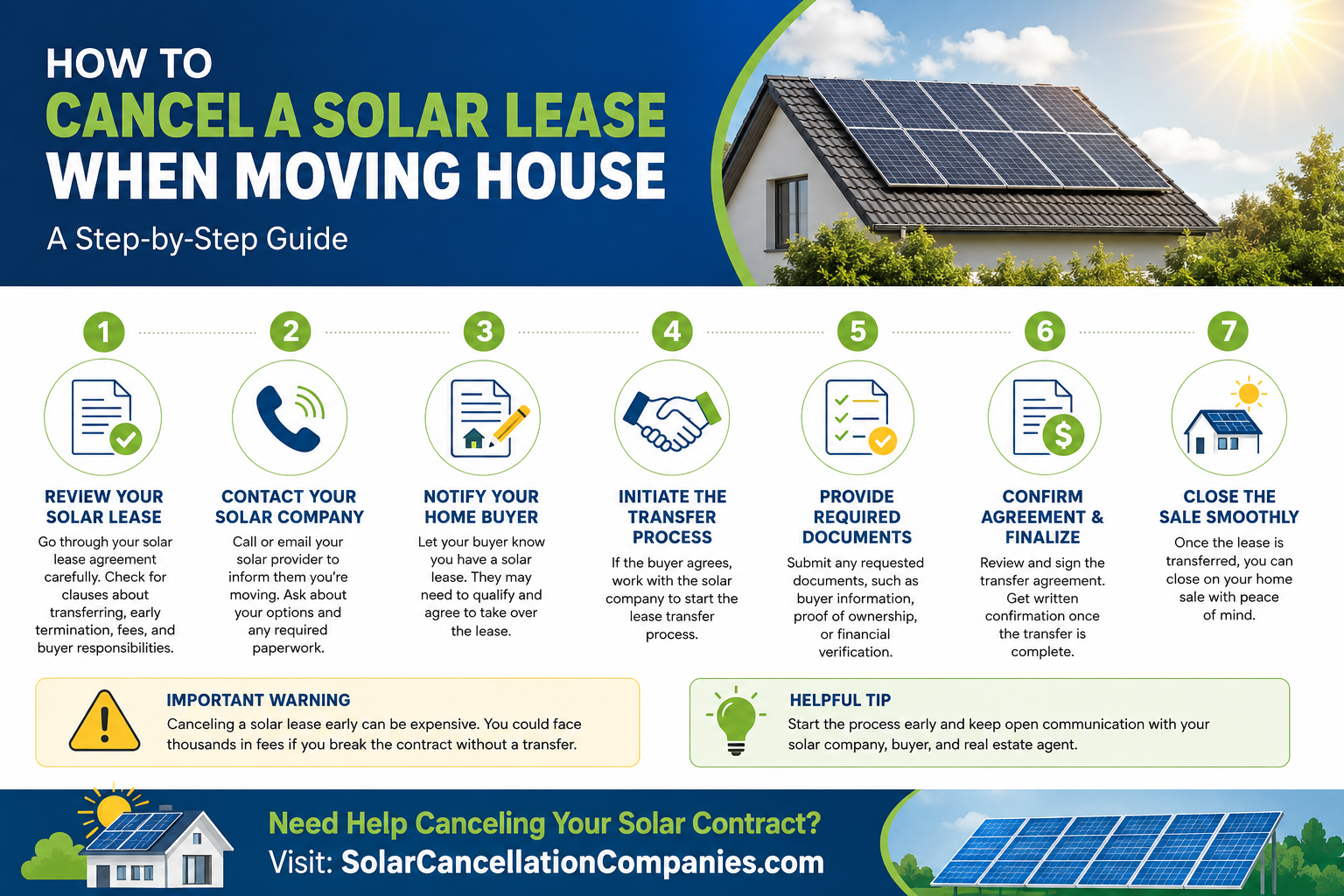
Steps to Terminate Solar Lease Before Home Sale
Follow these steps to terminate the solar lease before the home sale:
- Request a formal buyout quote from your provider.
- Review your contract for any “exit” or “relocation” clauses.
- Consult with a solar cancellation expert to review your rights.
- Notify your real estate agent about the lease details immediately.
Sell House With Solar Lease Agreement: What Sellers Should Know?
You must be transparent when you sell a house with a solar lease agreement. Disclose the lease in your initial listing to avoid surprises. Provide copies of the last 12 months of utility bills. Show the buyer exactly how much they will save on power.
The more information you give, the more comfortable the buyer feels. Hiding the lease until the last minute often kills the deal. Work with an agent who understands solar contracts.
Local Guide: Cancel Solar Lease When Moving in Houston, TX
Houston homeowners face unique challenges with solar contracts. The local market is booming, but solar debt can slow things down. Knowing local trends helps you navigate the process better.
Solar Lease Transfer Houston Texas
A solar lease transfer in Houston Texas is common in suburbs like Katy. Buyers there often look for energy-efficient homes.
Highlight the air conditioning savings during hot Texas summers. This can make the transfer more appealing to buyers.
Common Mistakes Homeowners Make With Solar Leases When Moving
Don’t wait until you have a buyer to check your lease. The transfer process can take 30 to 60 days. Waiting too long can cause your home closing to fail.
Another mistake is assuming the panels add value to the home. In a lease, the panels are a liability, not an asset. Always treat the lease as a debt that needs to be settled.
Finally, never sign a transfer without reading the new terms. Some companies try to reset the 20-year clock for the buyer. This makes the house much harder to sell.
FAQ Section
Can I cancel my solar lease if I sell my house?
Yes, but you usually have to pay a buyout fee. You can also choose to transfer the lease to the buyer.
What happens to the solar lease when moving home?
The lease stays with the house, or you pay it off. You cannot take leased panels to your new house easily.
How to transfer a solar lease to a buyer?
Contact your solar company’s transfer department. The buyer must submit a credit application for approval.
Do buyers accept solar lease agreements?
Some do, but many find them to be a financial burden. Offering a seller credit can help them say yes.
Can solar lease affect a home sale?
Yes, it can lower the buyer’s debt-to-income ratio. It also adds another step to the closing process.
What is the cost of cancelling a solar lease when moving?
It typically costs $15,000 to $30,000 to pay off the lease. This price depends on the age and size of the system.
How to remove solar panels before selling a house?
You must pay the solar company to remove them. They will also charge you for the remaining lease payments.
Conclusion
Having a clear plan is critical when cancelling a solar lease or moving house. You will have the option of a transfer, a buyout or complete cancellation. Each has a different effect on your wallet and your sale.
A solar contract should not prevent you from moving. Begin by reading your contract and consulting experts. The best way to ensure a smooth move is to plan early.
Seek help if you are dealing with a bad solar company. Professional services may be a route to an escape from the contract. You have the right to sell your home without undue anxiety.