
Selling your home should be an exciting milestone. However, discovering a solar UCC lien on your property can quickly turn that excitement into a nightmare. Many homeowners find themselves stuck when a title search reveals an unexpected filing.
If you are worried about a solar UCC lien home sale delay, you are not alone. This guide breaks down exactly what these filings are and how to clear them so you can close your deal on time.
Can a solar lien stop a home sale?
A solar lien stops a home sale by clouding the title. Mortgage lenders require a “first-position” lien on the property. Since a UCC filing sits on the title report, it creates a legal hurdle. You must either pay off the balance, transfer the agreement, or temporarily lift the lien to finish the sale.
While it is possible to sell with a lien, it requires specific cooperation between you, the solar company, and the buyer.
What Is a Solar UCC Lien?
The solar UCC lien is a legal notice filed by a solar company or lender. It protects their interest in solar equipment. Unlike a mortgage, which is a lien against your house, a UCC-1 filing is a lien against the solar panels themselves.
In the world of UCC lien solar panels meaning, the filing tells the public that the panels are personal property, not part of the real estate. It ensures that if you default on your payments, the solar provider can reclaim their equipment. Even though it is not a direct claim on your land, it appears on your title report and impacts your solar UCC filing real estate status.
Why Solar Companies File a UCC Lien
Solar companies use these filings to protect their investment. Whether you have a UCC lien solar lease agreement or a loan, the provider wants to ensure they get paid.
- Solar loan explanation: If you financed your panels, the lender uses the UCC filing as collateral.
- Solar lease explanation: If you lease the system, the company owns the hardware. The filing prevents you from selling the panels as part of the house.
- Lender protection: It prevents the panels from being included in a home foreclosure or a standard mortgage.
How a Solar UCC Lien Affects Your Home Sale
When you list your home, the solar UCC lien impact on selling a house becomes visible during the title search. This is where the UCC lien solar panels title issues begin.
- Title Reports: The filing shows up as a “cloud” on the title.
- Buyer Concerns: Buyers may fear they are inheriting a massive debt.
- Lender and Refinancing: Banks rarely allow a solar UCC lien refinancing issues to persist. They want to be the only ones with a claim on your property.
Common Problems Homeowners Face With Solar UCC Liens
Many homeowners stuck with solar UCC lien filings face significant stress. The solar lien problems when selling houses are often discovered at the last minute.
- Sale Delays: Negotiating with solar companies can take weeks, pushing back your closing date.
- Buyer Refusal: Some buyers will walk away rather than deal with a UCC lien solar contract.
- Lien Not Removed After Payoff: Sometimes companies forget to file the paperwork to clear the debt.
- Refinancing Blocked: You cannot get a better interest rate on your mortgage if the solar lien is in the way.
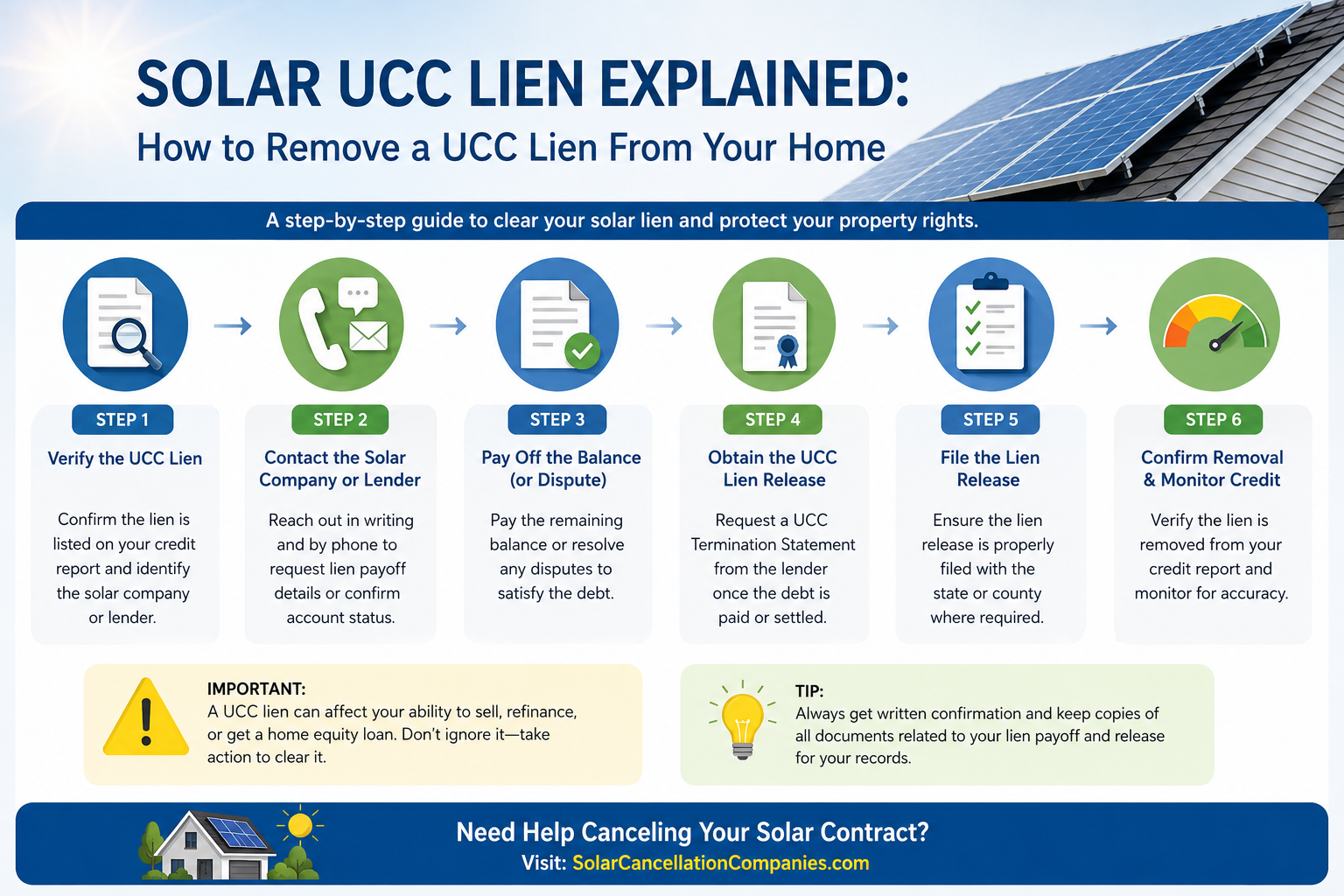
Step-by-Step: How to Remove a Solar UCC Lien Before Selling
If you need to know how to remove solar UCC lien before selling house, follow these steps immediately:
- Check the lien: Pull your title report to find the lender’s name and the filing number.
- Contact the lender: Call the solar company’s finance department.
- Request a payoff quote: Ask exactly how much is owed to release the lien.
- Pay or settle: You can pay from your pocket or use sale proceeds at closing.
- Request UCC-3 termination: This is the legal document that cancels the lien.
- Confirm removal: Ensure the county records reflect that the title is clear.
If the process seems too complex, there are companies that help remove solar lien filings and handle the negotiations for you.
Solar Lien Payoff vs Transfer vs Dispute
When handling solar lien payoff vs transfer options, you have three main paths:
- When to pay off: Best if you have high equity. You pay the balance at closing, and the panels become part of the home’s value.
- When to transfer: The buyer takes over the payments. This requires the buyer to qualify for the solar credit. Use a UCC lien solar panel transfer process to ensure the paperwork is legal.
- When to dispute: If the company is charging hidden fees or the contract was predatory, you may need solar agreement dispute help USA to fight the lien.
What Happens If You Don’t Remove the UCC Lien?
If you ignore the lien, your home sale will likely fail. The buyer’s lender will deny the mortgage. You could face a breach of contract with your buyer. Additionally, the solar company may eventually seek legal action or repossession of the equipment, further damaging your credit and property value.
Can You Sell a House With a Solar UCC Lien?
Yes, you can sell the house, but the lien must be addressed during escrow. You cannot simply ignore it and hope no one notices. Most sellers either pay the lien off using the money from the sale or successfully transfer the lease to the new owner.
Solar UCC Lien and Title Issues Explained
During escrow, the title company looks for any “encumbrances.” The solar UCC lien explained in title terms is an encumbrance. It stays attached to the equipment until a UCC-3 termination is filed. If you do not handle this, the cloud remains, and the title is not marketable.
Solar Lease vs Loan: How Liens Differ
The UCC lien vs property lien solar debate often confuses owners.
- Solar Loans: You own the panels. The UCC-1 is security for the money you borrowed.
- Solar Leases: You do not own the panels. The UCC-1 protects the company’s ownership of the hardware.
In both cases, the answer to what is a UCC lien on solar panels answer remains the same: it is a hurdle for your real estate transaction.
Misconceptions About Solar UCC Liens
Many people believe a UCC lien is the same as a mechanic’s lien. This is false. A mechanic’s lien is for unpaid work. A solar panel lien explained as a UCC filing is a standard financing tool. Another myth is that the lien makes the home impossible to sell. It simply makes the sale more technical.
Legal and Financial Options to Resolve Solar Liens
If you are struggling, explore legal options to remove solar lien filings. You may be able to negotiate a settlement if the solar company misled you about the terms. Many homeowners seek solar contract legal help from the United States to review their agreements for exit clauses.
Timeline of Selling a Home With a Solar UCC Lien
- Day 1-7: Identify the lien and contact the solar provider.
- Day 8-20: Negotiate the payoff or transfer with the buyer.
- Day 21-30: Coordinate with the title company to ensure the UCC-3 is ready.
- Closing Day: The lien is settled, and the title is cleared.
How to Avoid Solar Lien Problems Before Selling
To prevent a solar UCC lien home sale disaster, act early.
- Read your UCC lien solar contract before listing the home.
- Keep records of all payments.
- Ask your solar provider about their “subordination” policy. This allows the mortgage to take priority without paying off the solar balance.
FAQs
What is a UCC lien on solar panels?
A UCC lien is a legal filing that gives a solar company a security interest in the panels installed on your home. It ensures the lender or owner of the equipment can reclaim it if payments stop. It appears on title reports during a home sale.
What is the UCC lien solar panels meaning for my credit?
The lien itself is not a negative mark on your credit. It is a standard part of financing. However, if you fail to resolve the lien during a sale or stop making payments, it can lead to collections and significant credit score damage.
How do I find solar lien removal services in California?
You can find specialized consultants or attorneys who focus on solar contract law. These experts negotiate with solar companies to release liens or transfer agreements. Searching to remove solar UCC lien near will help you find local experts who understand state-specific laws.
Is there a solar lien help the USA for predatory contracts?
Yes, there are organizations and law firms that specialize in solar agreement disputes to help the USA. They help homeowners who were lied to about costs or lien impacts. These services can often help you remove a lien without paying the full, unfair balance.
Conclusion
Understanding the solar UCC lien in this guide is the first step toward a successful home sale. While these filings can be stressful, they are a common part of modern real estate. Don’t let a solar UCC filing real estate issue ruin your closing.
If you are currently facing solar lien problems when selling a house, take action today. Contact your lender, talk to your title agent, or seek professional solar contract legal help in the United States. Clearing your title now ensures a smooth transition for you and your buyer.
Need expert assistance? Our team specializes in helping homeowners navigate these complex filings. Whether you need to remove a solar UCC lien or require national solar lien help USA, we are here to ensure your home sale stays on track. Contact us today for a consultation.