

Getting a collection notice about your solar panels is scary. It gets more confusing fast. The company chasing you for payment may not be the one that installed your system. If a solar company is threatening collections, you are not alone. You still have options.
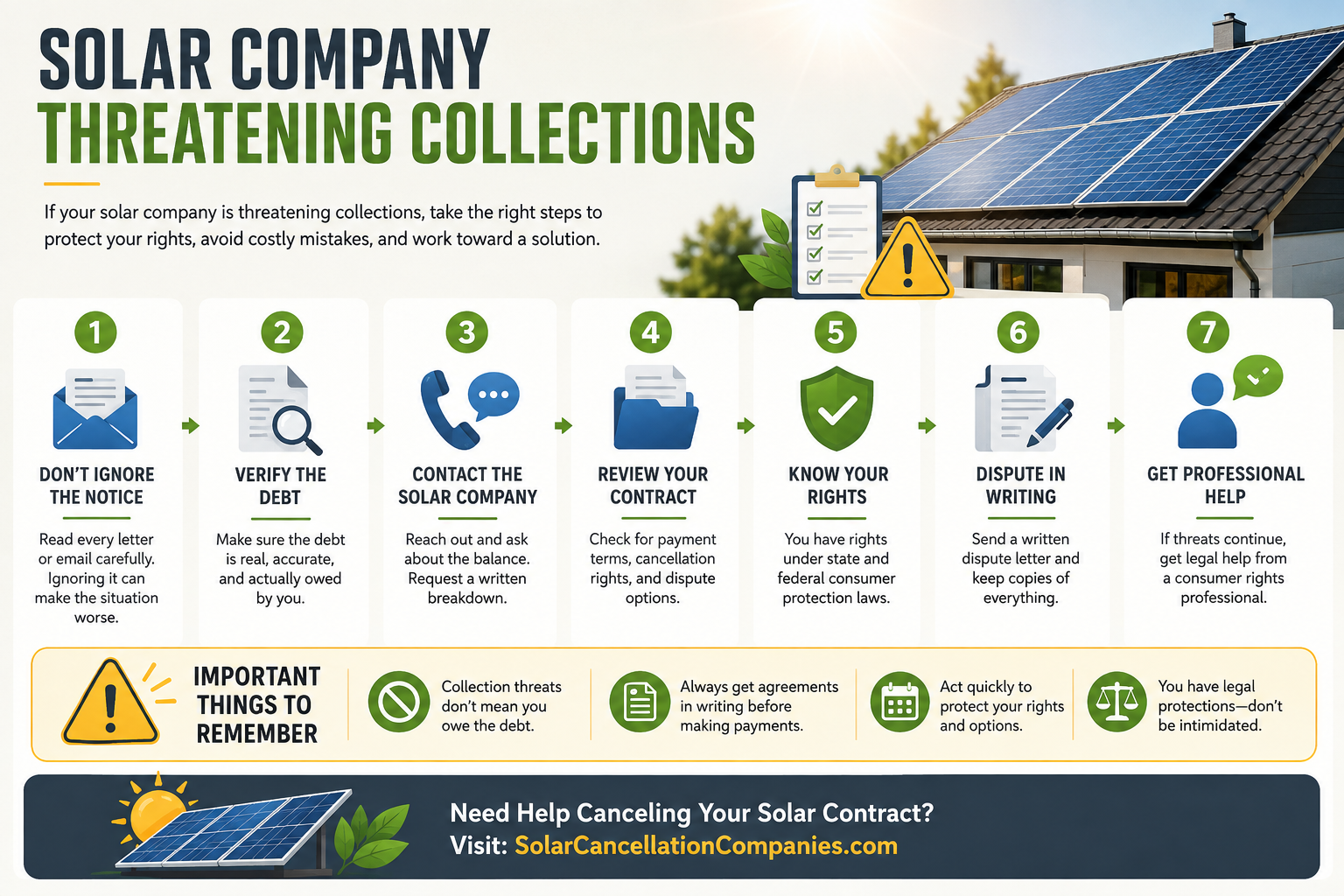
First, do five things. Do not ignore the notice. Find out who sent it. Check the amount against your contract. Save every document. Watch your deadlines.
What to Do If a Solar Company Threatens Collections
Act quickly, but act carefully. Each step you take now matters.
Do Not Ignore the Notice
Ignoring a collection letter never makes it go away. It often makes things worse. Silence can lead to added fees or credit damage.
Identify Who Is Demanding Payment
Solar debt often changes hands. The installer, a bank, a servicer, and a collector can all be different. Read the letter closely.
Check the Amount Against Your Contract
Pull your solar agreement and loan papers. Compare the balance in the notice with what you signed. Errors happen more than people think.
Dispute Incorrect Charges in Writing
If something looks wrong, put your dispute in writing. Phone calls are easy to forget later. A written record protects you.
Request Debt Validation When Applicable
You can ask a collector to prove the debt is yours. Make this request in writing.
Save Every Notice and Payment Record
Keep copies of everything. Letters, emails, and payment records all matter later.
Why Is My Solar Company Threatening Collections?
A few things tend to trigger this. Missed or late payments are the most common cause. Disputed charges, a rejected cancellation request, or a lender and installer feud can trigger it too. Sometimes payments continue after a homeowner thought they had cancelled.
Can a Solar Company Send You to Collections?
Yes. A solar lender or installer can send an unpaid account to collections once payments fall behind.
This usually happens after several missed payments. Disputing your contract does not stop it. Collections can start even while you try to cancel.
Installer vs Lender vs Debt Collector
These are not the same party. The installer built your system. The lender financed it. A servicer manages your payments. A debt collector may later step in to recover what is owed.
What Happens When a Solar Account Goes to Collections?
Expect calls, letters, and possibly new fees. Your credit may take a hit, though this varies by lender. A collector may sometimes sue or slow a home sale, but not every account goes this far.
How to Dispute a Solar Debt in Collections
Start by confirming who owns the debt. Then review your solar contract and loan agreement, since these are often separate papers. Check the balance and your payment history. Pin down your exact reason for disputing it. Put your dispute in writing with proof, then track all deadlines and replies.
Documents to Gather for Your Dispute
Collect these before you file:
- Your solar contract
- Loan or financing agreement
- Payment history and statements
- Collection notices you received
- Emails and texts with the company
- Any cancel request you sent
- System records and install notes
- Photos of the equipment
- Sales promises made at signing
How Does Solar Debt Validation Work?
A debt validation request asks a collector to prove you owe the money. Under the Fair Debt Collection Practices Act, you generally have 30 days after first contact to ask. Once you do, that collector should pause the collection until it answers. This rule applies to third party collectors, not always to your original lender.
Can You Stop Solar Collections While Disputing?
You cannot always stop solar debt collection completely once it starts. A dispute can slow some activity, but it will not stop every action. Filing a complaint will not cancel your contract or erase what you owe. If a collector keeps calling, keep records and consider getting help.
Can You Cancel Solar After It Goes to Collections?
Collections status alone does not cancel your contract. You need to check how your contract lets you cancel. These often depend on whether work had already started.
Your solar contract and your loan are usually two separate documents. Resolving one does not end the other. Both may need their own dispute.
What If the Solar Company Closed?
An installer closing its doors does not erase your loan. Several solar lenders have gone through bankruptcy in recent years. Homeowners often see their loan move to a new servicer while the debt continues. Warranties get harder to enforce, but you may still have grounds to dispute the deal.
Can Solar Collections Hurt Your Credit Score?
Yes. Late payments and collection accounts can show up on your credit report. You can check your reports for free. A law called the Fair Credit Reporting Act lets you dispute anything wrong. Good records make any future dispute easier to win.
Can a Solar Company or Debt Collector Sue You?
A collection letter is a warning, not a lawsuit. Actual court papers are different and far more urgent. Never ignore a solar debt lawsuit, even if you think the charges are wrong. A late response can lead to a default judgment. This is when a licensed lawyer becomes important.
Where Can You File a Complaint?
You have a few options. Try the Consumer Financial Protection Bureau, the Federal Trade Commission, or your state attorney general. These agencies help enforce your solar debt collector rights when a company crosses the line. A complaint creates a useful record, but it will not cancel your contract on its own.
Common Mistakes to Avoid
Do not ignore notices or miss deadlines. Do not throw away documents or rely only on phone calls. Do not confuse the installer with the lender. Never assume a complaint pauses payments, and never ignore court documents.
Solar Collections Action Checklist
- Identify who is collecting the debt.
- Read the collection notice carefully.
- Review your solar contract.
- Review your financing agreement separately.
- Verify the balance owed.
- Gather payment and system records.
- Write down your reason for disputing.
- Submit your dispute in writing.
- Request debt validation if it applies.
- Track every deadline and response.
- Check your credit reports.
- Get professional help if needed.
When Should You Get Help?
Get outside help if you tried to cancel and got turned down. The same goes if your account is in collections, or your credit took a hit. It also applies if the installer and lender blame each other. Also get help if the deal was not honest, you got a lawsuit, or the company closed. Our solar exit guides and company lookup are both good starting points if you’re not sure where to begin.
How Solar Cancellation Companies Can Help
Solar Cancellation Companies help homeowners make sense of a messy solar contract. This means reviewing your paperwork and spotting where the installer or lender went wrong. It also means organizing your papers and explaining your options to cancel.
Solar Cancellation Companies is not a law firm and does not give legal advice. If your case involves a lawsuit, a licensed lawyer is the right next step.
Frequently Asked Questions
Can a solar company send me to collections?
Yes. If payments fall behind, a solar lender or installer can send your account to collections. This works like any other debt.
How do I dispute a solar debt?
Confirm who owns the debt and review your contracts. Check the balance, then submit your dispute in writing.
Can I cancel solar after collections start?
Sometimes, depending on your contract terms and when work began. Collections alone does not cancel the contract.
Does disputing solar debt stop collections?
Not always. A dispute can pause some activity under debt validation rules. It will not stop everything.
Can solar collections hurt my credit?
Yes. Late payments and collection accounts can appear on your credit report. The impact varies by lender.
Can a solar lender sue me?
Yes, this can happen. If you get court papers, respond quickly and speak with a lawyer.
What documents do I need to dispute solar debt?
Your solar contract, loan agreement, payment history, collection notices, and any messages with the company.
What if my solar company went out of business?
Your loan usually continues even if the installer closes, though it may move to a new servicer.
Does cancelling solar cancel the loan?
Not automatically. Your solar contract and your loan are often separate. Each may need its own dispute.
What if a debt collector keeps contacting me?
Request debt validation in writing and document every contact. Then consider reporting the behavior to your state attorney general.
Take Action Before This Gets Worse
Your next step depends on where you stand. If you only got a warning, verify the balance and save your documents. If you are already in collections, find out who owns the debt. Then consider requesting validation. If the amount looks wrong, gather proof and start a written dispute.
If you want to cancel your solar deal, remember something important. Your solar contract and your loan are usually separate fights, and your options often depend on your state’s rules. If you got real court papers, do not wait. Talk to a qualified lawyer right away.
If your solar contract has become a headache, Solar Cancellation Companies can help. Reach out and let us review your situation.