
Selling a home with solar panels is common in 2026. Most buyers now see solar as a plus, not a problem. But the sale can get tricky if you still owe money on the system, or if you lease it instead of owning it. This guide walks you through every ownership type, the paperwork you need, and the steps that keep your closing on track. For free resources and access to reviewed specialists who help homeowners resolve solar contract issues before a sale, visit Solar Cancellation Companies.
Can You Sell a Home with Solar Panels?
Yes, you can sell a home with solar panels. The process depends on how you paid for the system. Owned systems are the simplest to sell. Financed and leased systems need extra steps, like a loan payoff or a lease transfer, before the deal can close.
Key Takeaway
Owned solar adds value with no strings attached. Financed or leased solar can still sell well, but you must start the paperwork early. Waiting until you have an offer is the top reason deals stall.
How Your Ownership Type Shapes the Sale
Before you list your house, figure out exactly how you own your system. This one fact shapes your whole selling plan. Our Solar Contract Type guide explains the legal differences between a loan, lease, and PPA and what each means for your sale, your title, and your buyer’s obligations.
- Owned systems. You paid cash or already finished your loan. The panels are yours, free and clear. Buyers see this as a bonus, not a burden.
- Financed systems. You still owe money on a solar loan. You can pay off the balance before closing, or transfer the loan to your buyer if the lender allows it.
- Leased systems. A solar company owns the panels. Selling your house with leased solar panels means the buyer must apply to take over your lease, or you must buy it out first.
- Power purchase agreements. You do not own the panels, you buy the electricity they produce. A PPA transfers much like a lease, and the buyer must qualify with the solar provider.
- PACE financing. This loan is tied to your property tax bill. It usually must be paid off, or disclosed clearly, before the sale can close.
Ownership Types at a Glance
| Ownership | Buyer Impact | Value Impact | Transfer Needed | Selling Difficulty |
| Owned | Low, straightforward | Strongest boost | No | Easy |
| Financed | Payoff or transfer | Moderate boost | Sometimes | Moderate |
| Leased | Buyer must qualify | Minimal boost | Yes | Moderate to hard |
| PPA | Buyer must qualify | Minimal boost | Yes | Moderate to hard |
Do Solar Panels Increase Home Value?
In most cases, yes. Zillow found that homes with solar panels sell for about 4.1 percent more than homes without. A 2026 study of California sales found an even bigger jump, with owned solar adding 5 to 10 percent to sale price. Leased and third party owned systems showed little to no price boost in that same study.
Appraisers now use tools built for green home features, so solar is easier to value than it used to be. Age matters too. Systems under ten years old carry the strongest premium, though older panels still add some value since they keep producing power.
Selling a House with Owned Solar Panels
This is the easiest path. Gather your original purchase agreement, permits, and any warranty paperwork. Buyers will want proof the system is paid off and working well. Share recent utility bills so buyers can see real savings.
Selling a House with Financed Solar Panels
You have two paths here. You can pay off the loan at or before closing, using sale proceeds if needed. Or you can try to transfer a solar loan to the buyer, which depends on your lender’s rules and the buyer’s credit.
Who pays the solar loan after a home sale depends on this choice. If you pay it off, you are done. If you transfer it, the buyer takes over payments going forward. Most sellers find selling homes with solar loan arrangements simpler when they pay it off first, since it avoids extra buyer approval steps that can slow closing.
A common mistake is waiting until under contract to even call the lender. Start this call the day you decide to sell.
Selling a House with Leased Solar Panels
Selling houses with leased solar panels takes more coordination. Your buyer must apply with the solar company and pass a credit check, since they will take over monthly payments. This is how to sell a house with leased solar panels without delays: notify the solar company as soon as you list, and hand buyers the lease terms early.
Can a buyer refuse a solar lease transfer? Yes. If they do not qualify, or simply do not want the payment, you may need to buy out the lease yourself before closing. For a detailed look at how buyout pricing works and how to challenge an inflated quote, see our Solar Lease Fair Market Value Buyout vs Contract Buyout guide.
The timeline for a solar lease transfer usually runs two to four weeks once the buyer applies. The cost to transfer a solar lease is often a small administrative fee, though buying out a lease early can run into the thousands depending on years left on the contract.
Selling a Home with a Power Purchase Agreement
A PPA sale works much like a lease sale. The buyer applies to take over the electricity contract. Some providers allow a buyout instead, which removes the transfer step entirely and can make your listing more attractive.
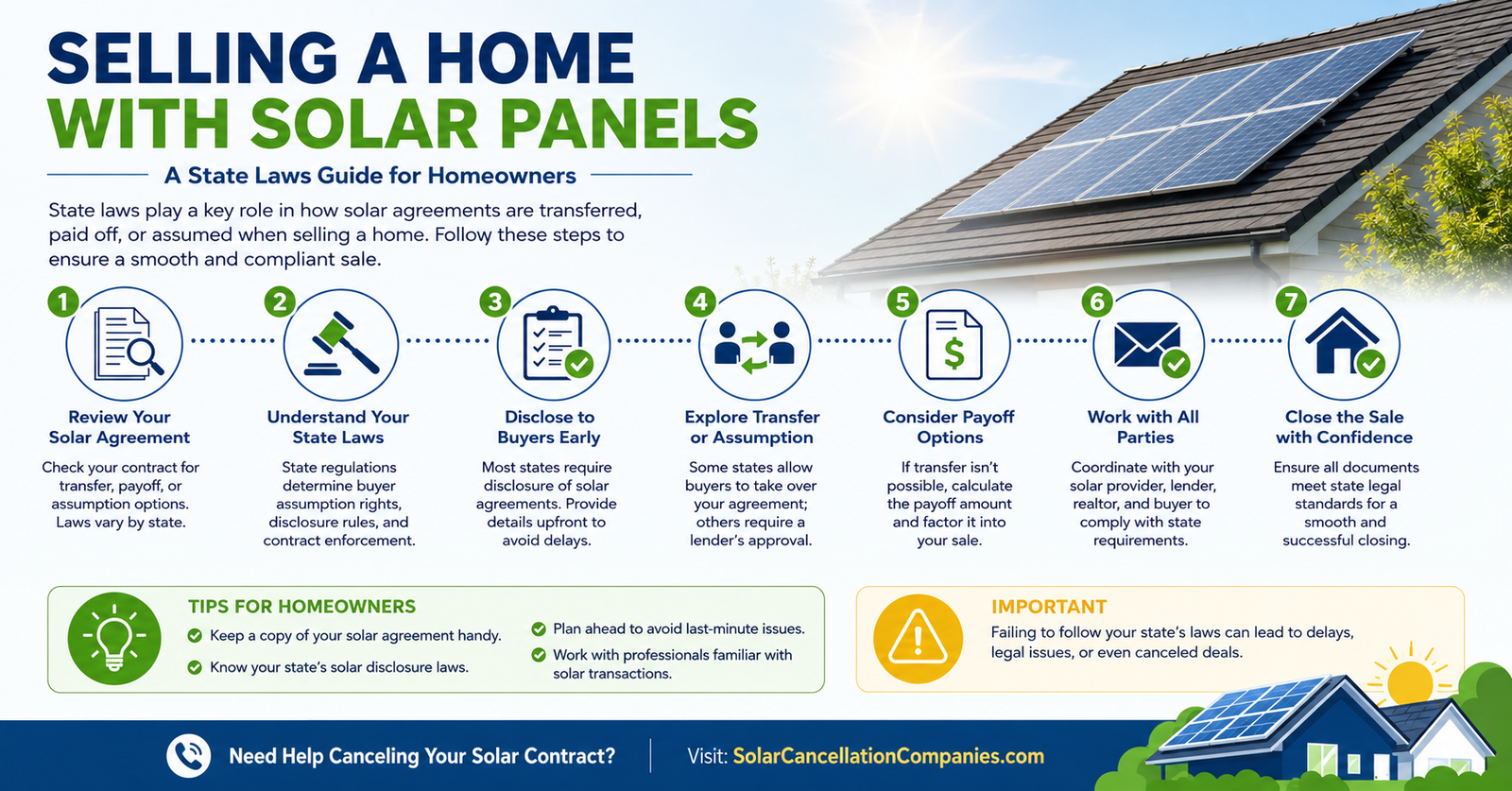
Step by Step: Selling Your Solar Home
- Confirm your ownership type and pull your original contract.
- Call your solar company or lender for a payoff or transfer quote.
- Gather every document listed below.
- Price and list your home with full solar details in the listing.
- Let your buyer start their loan or lease application early.
- Complete the transfer or payoff before or at closing.
- Close and hand over all warranty and account information.
Documents Needed to Sell a Solar Home
Buyers, lenders, and title companies will ask for these documents needed to sell solar home:
- Purchase, loan, or lease agreement
- Warranty details for panels and inverter
- Recent production and utility bills
- Permits and final inspection sign off
- Any lien release or UCC filing information
- HOA approval, if your system needed one
- Installer contact information
If your installer has gone out of business, obtaining some of these documents can be harder. Our guides on Sunnova and SunStrong cover how to track down account records and lien release paperwork when the original company is no longer operating.
Costs You May Face
Solar Panel Home Sale Cost Comparison
| Cost Item | Typical Range |
| Loan payoff | Full remaining balance |
| Lease buyout | Varies by years remaining, often several thousand dollars |
| Transfer or admin fee | Typically under 500 dollars |
| Roof repair before reinstall | 1,500 to 6,000 dollars |
| Legal contract review | Varies by attorney |
Biggest Risks and Why Deals Fall Through
The risks of selling a home with solar panels usually come down to paperwork and timing. A buyer’s credit gets denied for the lease. A lien shows up that nobody disclosed. The solar installer has gone out of business, making warranty claims harder to prove. Missing documents slow the title company at the worst possible moment.
You can avoid most of these problems with early action. Order your payoff letter the week you list. Disclose the solar agreement in writing. Keep a folder with every document ready to hand to your agent.
Solar Appraisal Requirements When Selling
Appraisers compare your home to similar solar homes nearby when they can. They may also use a cost approach, based on system age and condition. Give your agent your production reports and original invoice. This paperwork helps the appraiser support a higher value.
Frequently Asked Questions
Should I pay off my solar loan before selling?
In most cases, yes. It simplifies the sale and avoids buyer approval delays, though a transfer can work if your buyer qualifies.
Can solar panels delay my closing?
Yes, mainly with leases or PPAs, since buyer approval and paperwork can take two to four weeks.
What if my solar installer is out of business?
You can often still get warranty support through the panel or inverter manufacturer directly.
Should I remove panels before selling?
Only if the roof needs replacing or the system is very old. Most owned systems are worth keeping in place.
When to Get Professional Help
If your solar contract feels confusing, or you are facing a lien, a title issue, or a lease that will not transfer, it may help to speak with someone who reviews solar contracts for a living. Solar Cancellation Companies exist to help homeowners understand these agreements and their options, including cases where a contract may need review or a closer look. A solar real estate attorney near you can also review loan or lease terms before you sign anything at closing.
Conclusion
Selling a home with solar panels does not have to be stressful. Know your ownership type first. Call your lender or solar company early. Gather your documents before you list. Handle a payoff or transfer as soon as you can, not after you are under contract. Do this, and your solar system becomes a selling point instead of a stumbling block. Contact Solar Cancellation Companies today if you need help reviewing your solar agreement, clearing a lien, or navigating a lease transfer before your sale closes.