
Solar panels are built to last 25 years or more, but that does not mean they are free from problems. Over time, weather, wear, poor installation, or equipment failures can affect how well your system performs.
If you’re dealing with solar panel problems, you’re not alone. Some issues are simple to fix, while others may require professional repairs or a closer look at your warranty. This guide explains the most common causes, warning signs, repair options, and practical steps you can take to protect your investment, and resources like Solar Cancellation Companies can help if a problem ever turns into a bigger contract dispute.
Solar Panel Problems at a Glance
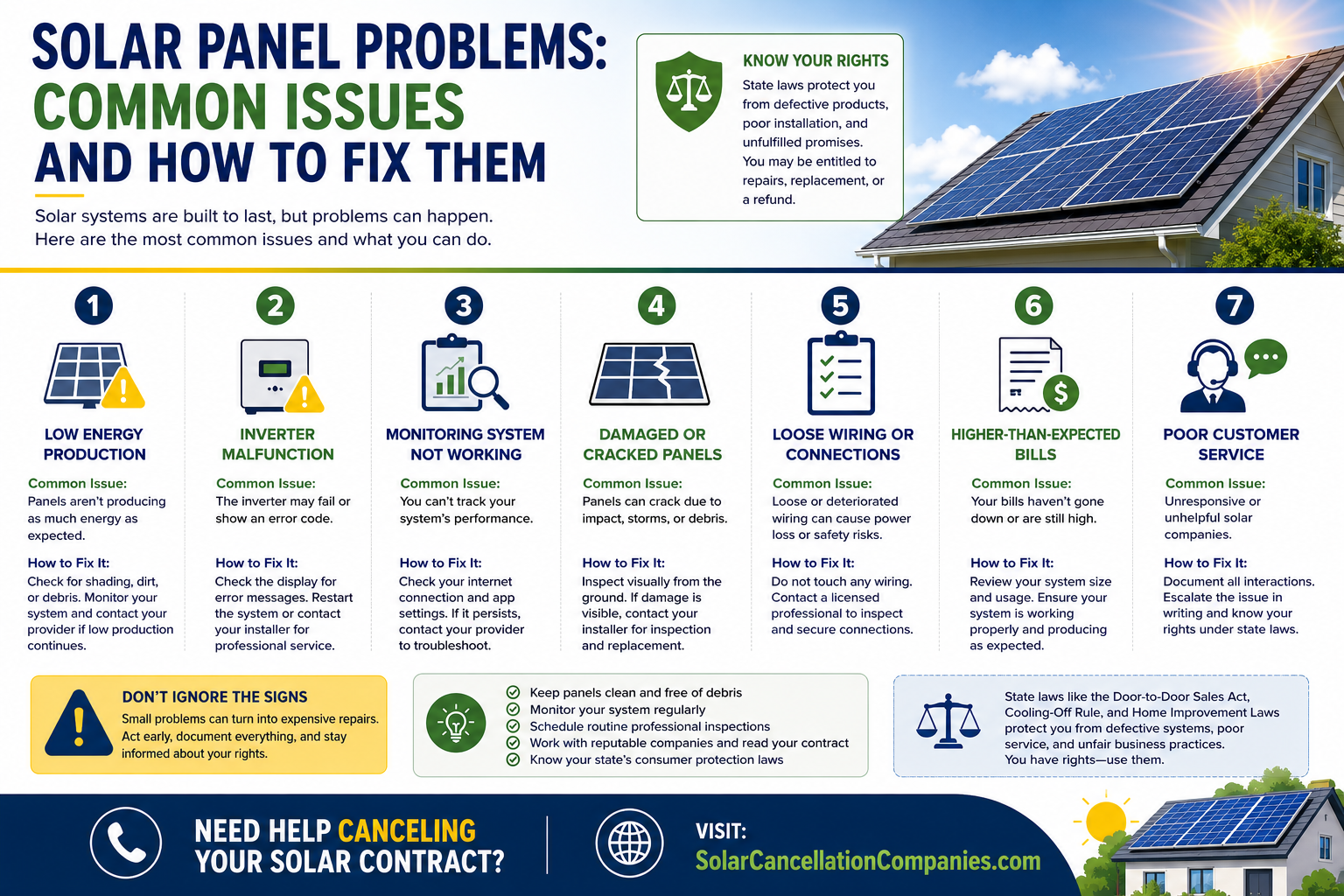
Common solar panel issues fall into three groups. Weak output. Broken parts. And solar installation defects. Once you know the group, the fix gets easy.
Here’s how each one looks, and where to start:
- Weak output: your power is lower than normal. Clean the panels and check for new shade.
- Broken parts: you see an error code or a blinking light. Call a pro right away.
- A bad install: you spot a roof leak or loose mounts. Contact your installer in writing.
Watch for these signs too. A power drop of ten percent or more. A red or blinking light on the inverter. A bill that climbs even in sunny weather. Or a burning smell.
Don’t ignore a loose wire. It often turns into a costly fix later. Treat early faulty solar panel signs as urgent.
How to Tell if Your Solar Panels Have a Problem
Start simple. Compare this month’s output and bill to last year. Check your inverter screen. Then walk the roofline and look for damage.
This basic solar panel troubleshooting routine catches most issues early. Here’s what common signs usually mean:
- Higher bill despite solar: a billing error or a system that’s too small.
- Lower output on sunny days: dirt, shade, or aging panels.
- Inverter error code: a fault or a broken part inside.
- Roof leak near panels: poor sealing during the install.
- Burning smell or hot spot: an electrical fault. Shut the system off and call a pro right away.
The Most Common Solar Panel Problems and Their Solutions
Here’s how the most frequent solar panel problems break down. This table shows the cause, the fix, and how urgent each one is.
| Problem | Cause | Solution | Urgency |
| Dirty panels | Dust or pollen buildup | Rinse or hire a cleaner | Low |
| Shade | Tree growth, new structures | Trim branches, add optimizers | Low |
| Inverter failure | Worn or faulty part | Repair or swap the unit | High |
| Wiring issues | Weather or pest damage | Have an electrician check it | High |
| Cracked panels | Storm or hail impact | Replace the panel | Medium |
| Hot spots | Shading or a bad cell | Have a pro swap the cell | High |
| Moisture damage | Seal failure | Reseal or swap the unit | Medium |
| Degradation | Normal aging | Track it against your warranty | Low |
| Storm damage | Wind, hail, debris | File a claim and repair | High |
| Pest damage | Chewed wiring, nesting | Add guards, fix the wiring | Medium |
A bad install causes many of these on its own. Watch for wrong mounting, roof leaks, loose wiring, or a failed code check.
Did your system never hit its expected output? That usually points to a bad install, not normal wear.
Why Are My Panels Underperforming and Why Is My Bill Still High?
Are you asking why my solar panels are underperforming? Start with the basics. Check the weather. Look for dirt or new shade. Think about your system’s age.
A sudden drop usually means a broken part. It’s not just normal aging.
A high bill after going solar often has a simple cause. It could be a billing error. Or a system that’s too small for your home. Rising power use plays a part too.
Compare your power bill to your app’s output numbers before you assume the worst.
Does the app look fine, but your bill says otherwise? Don’t trust the screen alone. A broken sensor can freeze on an old reading. Ask for a hands on check to be sure.
Solar Panel Repair Costs in the US
Here’s what solar panel repair cost typically looks like across the country right now.
| Service | Typical US Cost |
| Diagnostic check | $100 to $300 |
| Panel cleaning | $150 to $350 |
| Wiring repair | $100 to $400 |
| Microinverter swap | $150 to $500 |
| String inverter swap | $800 to $3,000 |
| Single panel swap | $200 to $550 |
| Roof leak repair | $300 to $1,500 |
Costs shift with roof pitch, system age, and where you live. The us solar panel repair cost in a big city often runs higher than in an area with easy roof access.
Should You Repair or Replace Damaged Solar Panels?
So, can damaged solar panels be repaired? Often, yes. Here’s how to pick between a repair and a full swap.
A repair usually makes sense when:
- Your system is under ten years old
- Only one or two panels are damaged
- The fix costs less than thirty percent of a full swap
- Your warranty is still active
A full swap usually makes more sense when:
- Your system is near twenty to twenty five years old
- The damage is widespread, like major cracking
- Repair costs are creeping close to a full swap
- Your warranty has run out with no maker support
Cracked glass or one failed microinverter? Those are usually easy fixes. Widespread hot spots or repeat failures often mean it’s time for solar panel repair or replacement as a full swap, not another patch.
Who Is Responsible for Solar Panel Problems?
Who handles what when things go wrong? Here’s a simple breakdown.
- Installer: handles the wiring, mounting, and code rules
- Maker: covers defects in the panels or inverter
- Lender: covers loan terms only, not equipment issues, which can vary depending on your contract type
- Insurer: covers storm, fire, or accidental damage
Has your solar installer responsible for defects gone quiet? Your workmanship warranty still applies.
Did the company close? The maker’s warranty usually stays valid. Independent repair shops can service most brands too. Keep your contract and warranty papers together. That’s your proof of coverage.
How to File a Solar Panel Warranty Claim
Here’s how to file a solar warranty claim without needless delays.
- Gather your contract, warranty card, and proof of purchase.
- Note the issue with photos and app screenshots.
- Contact the maker or installer in writing.
- Ask for a case number and a timeline.
- Keep every email, invoice, and check report.
- Escalate to your state office if you’re ignored.
Why do claims get turned down? Usually it’s missing records, or damage marked as normal wear. File early. Keep clear records. That’s your best shot at a yes.
If Your Installer Goes Quiet or Repairs Keep Failing
- Reread your contract for warranty and dispute terms
- Send a written request by email or certified mail
- Contact the panel and inverter makers directly
- Ask your lender or lease firm about backup service
- File a complaint with your state licensing board
- Bring in an outside inspector if the same fix keeps failing
Does home insurance cover this? Usually, yes, for storm, fire, and wind damage. It works the same way as roof coverage. But normal wear isn’t included, so weigh your deductible against the repair cost first.
Are you facing an unsafe install, a vanished installer, repeat failed fixes, or a stalled dispute? Slow down. Review your contract closely before you spend more.
Solar Panel Troubleshooting Checklist
- Compare this month’s output to the same month last year
- Check the inverter for error codes or warning lights
- Look for cracks, dark spots, or debris on the panels
- Confirm the app is updating in real time
- Review your power bill for billing credits
- Snap a photo of any damage and note the date
Preventing Common Solar Panel Problems
- Clean panels once or twice a year
- Trim trees before they cast shade
- Book a check every one to two years
- Keep contracts, permits, and warranty papers together
- Add guards to keep pests out
- Track output each month to catch small drops early
Some homeowners make the same mistakes. They ignore small warning signs. They try DIY wiring fixes. They put off checks after a storm. They lose their paperwork.
A cheap fix without a real diagnosis often costs more the second time.
Frequently Asked Questions
What are the most common solar panel problems?
Dirt, shade, inverter faults, wiring damage, and normal aging top the list. Most are easy to spot with an app and a quick look.
How much does solar panel repair cost?
Most US repairs run $400 to $1,000. A full inverter swap can reach $3,000.
Can damaged solar panels be repaired instead of replaced?
Yes, often. Cracked glass, loose wiring, and one failed microinverter are usually fixable. Storm damage may call for a full swap instead.
Who is responsible if my panels were installed wrong?
The installer is on the hook for bad workmanship. That’s separate from the maker’s warranty on the gear itself.
What if my solar company went out of business?
Maker warranties usually stay valid. Independent repair shops can service most brands, even without the first installer.
Should I repair or replace an aging solar system?
If repairs are near the cost of a full swap, and the warranty has run out, a swap is usually the smarter long term move.
Final Thoughts: Choosing the Right Next Step
Every homeowner facing solar panel problems is weighing the same question. Can this be handled at home, or does it need outside help?
A small dip that clears up after cleaning or trimming means routine upkeep is enough. An error code, a leak, or a sudden output drop means it’s time to call a pro.
When a part is faulty, your maker’s warranty should cover it. When the fault traces back to the install, your installer’s workmanship warranty applies, even if that firm is hard to reach.
Write everything down from day one. Photos and clear records turn a denied claim into an approved one.
If fixes keep failing, or your installer has gone silent, get an outside check, compare vetted help through our company lookup, and review your contract before you spend more, or contact us if you want a second opinion. A clear, informed plan protects your money far better than guessing. It puts you back in charge of your system’s future.