
Many homeowners install solar expecting lower energy rates. However, many find their monthly payments rise every single year. This happens because of a solar escalation clause.
If you are reviewing a solar contract, understanding this clause is vital. It can be the difference between saving money and paying more than utility rates.
What Is a Solar Escalation Clause?
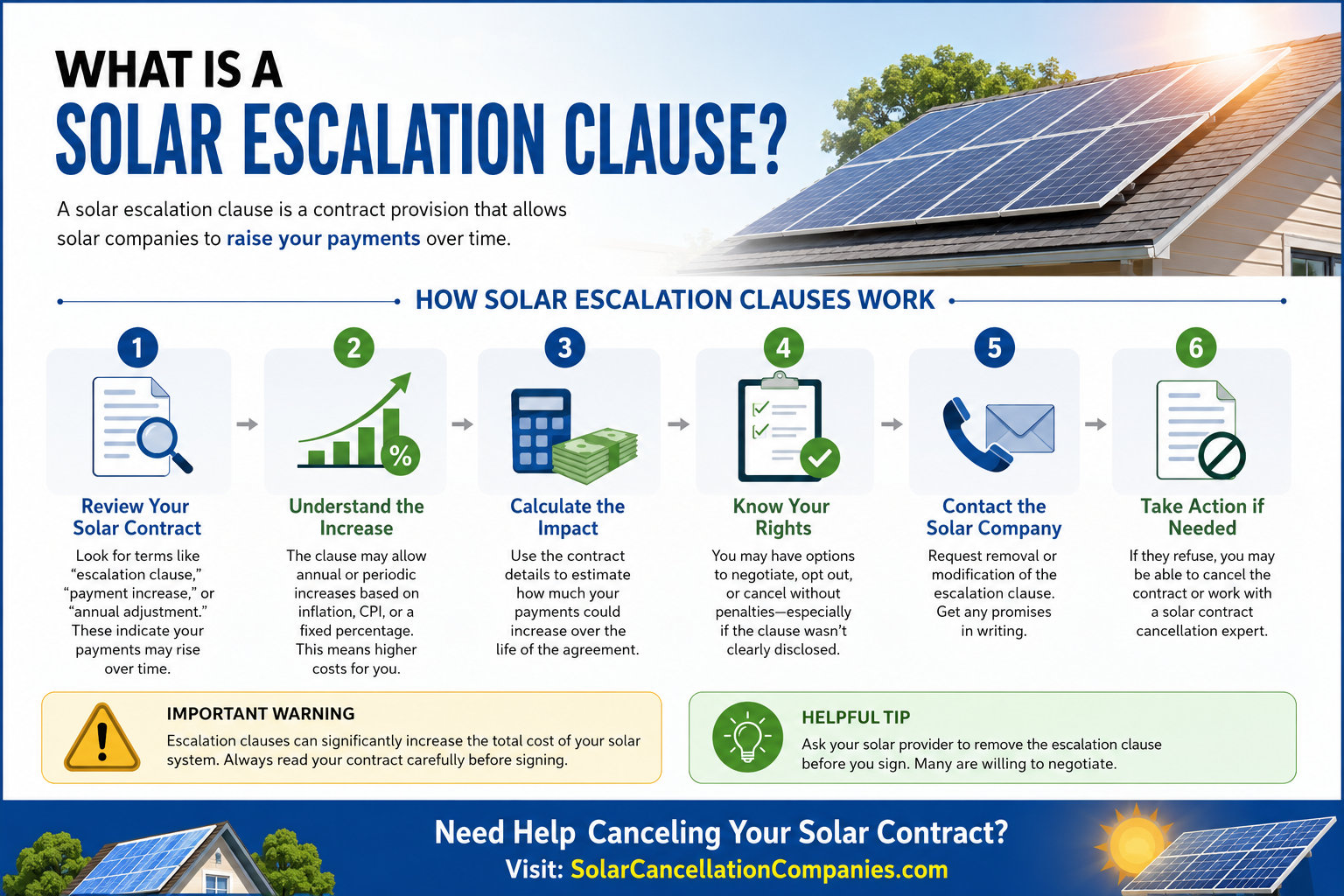
A solar escalation clause is a contract term that raises your monthly payment by a fixed percentage annually.
You usually find this solar escalator clause explained in the “Payment Terms” section. It allows the solar company to increase your rate to keep up with inflation.
How a Solar Escalation Clause Works
Your solar agreement sets a starting price for power. However, the solar contract escalation terms mean this rate is not permanent.
Annual Increase Explanation
Your payment increases every year on the anniversary of your system’s start date. Even if production stays the same, you pay more for that power.
Fixed vs. Variable Escalation
Most contracts use a fixed solar lease escalation rate. This is usually a set jump, like 2.9% or 3.9%. These increases happen regardless of the actual economy or energy market.
How Much Will Your Solar Payments Increase Over Time?
Homeowners often ask: how much do solar payments increase annually? While 2.9% sounds small, it adds up over 20 to 25 years.
If your starting payment is $150 with a solar payment increase clause, here is the growth:
- Year 1: $150.00
- Year 10: $193.99
- Year 20: $258.42
- Year 25: $298.12
By the end, you are paying double your original rate.
The Compounding Effect of Solar Escalation Rates
The danger of this clause is “compounding.” Each year’s increase applies to the previous year’s higher price.
This creates a snowball effect. The dollar amount of the increase gets larger every year. Over two decades, these costs can erase your expected savings.
What Solar Companies Often Hide
Sales reps often focus only on Year 1 savings. They may gloss over the solar lease price increase.
Misleading Assumptions
Companies often guess that utility rates will rise by 5% or 6%. They use these high numbers to make a 2.9% solar PPA escalation rate look cheap.
Hidden Contract Terms
The escalation terms are often buried in fine print. Many homeowners report being told payments were fixed, only to find a solar financing escalation clause later.
Risks of a Solar Escalation Clause
Consider these long-term risks before you sign:
- Shrinking Savings: Your net savings get smaller as payments rise.
- High Total Cost: You pay significantly more over the life of the lease.
- Market Shifts: If local energy prices drop, you are still stuck with the yearly hike.
Real Homeowner Concerns
We hear from many people who feel trapped by these terms. Common complaints include:
- Higher Bills: Solar bills eventually exceeding old utility costs.
- Feeling Misled: Sales promises of locked-in rates that were not true.
- Selling Stress: Buyers often refuse to take over a contract with rising costs.
Solar Lease With Escalator vs. Without Escalator
Compare these two options side-by-side:
| Feature | With 2.9% Escalator | Without Escalator (0%) |
| Starting Payment | Lower ($150) | Higher ($185) |
| Year 20 Payment | $258 | $185 |
| Total Cost | Much Higher | Lower & Predictable |
A 0% escalator starts higher but saves more money after year seven.
Selling a Home With a Solar Escalation Clause
Selling a home with a solar lease is already a challenge. Rising payments make it harder.
Buyer Hesitation
Savvy buyers do not want growing liabilities. They may demand you pay off the lease before closing.
Transfer Issues
If a buyer rejects the solar lease escalation rate, you might owe the full balance. This can cost tens of thousands of dollars at closing.
Can You Remove or Negotiate an Escalation Clause?
You have the most power before signing the contract.
- Request 0%: Ask for a flat rate. Your starting price will be higher, but it never moves.
- Compare Quotes: Only work with companies that offer transparent solar contract escalation terms.
- Check the Math: If the paper says 2.9%, ignore the verbal “fixed rate” promises.
Can You Cancel a Solar Contract Because of an Escalation Clause?
If you are in the “cooling-off” period, you can cancel easily. This is usually 3 to 10 days after signing.
If the system is already installed, cancellation is much harder. However, if you were victims of predatory sales, you may have options. Professional contract reviews can help you find a way out.
How to Calculate Solar Payment Increases
You can calculate solar payment increase with escalation rate using this simple formula:
- New Payment = Current Payment x (1 + Escalation Rate)
Example: $100 payment with a 3% escalator (0.03).
$100 x 1.03 = $103 for the next year.
Local Issues and Complaints
Different states have different consumer protections regarding these clauses.
- California: Many homeowners report a solar lease escalation dispute in California over misrepresented savings.
- Texas: We see many cases involving a solar contract cancellation escalation clause Texas.
- Florida: A common solar payment increase complaint Florida solar company involves seniors in long-term escalator deals.
Searching for a solar contract review escalation clause near you can help you find local experts.
FAQs
What is a normal escalation rate?
Most industry rates fall between 1.9% and 3.9% per year.
Can I buy out the lease to stop the increases?
Most buyouts are based on future escalated payments, making them very expensive.
Does every solar lease have one?
No. You can often find fixed-rate leases if you ask for them specifically.
What is an escalation clause in a solar contract and how does it work?
It is a yearly percentage hike. It multiplies your previous bill by the escalation rate.
Final Thoughts
A solar escalation clause helps solar companies maximize profits. For you, it can be a financial trap.
Always check the “Payment Schedule” in your contract. If the numbers rise every year, you have an escalator. Make sure the long-term cost fits your budget before you sign.