

Solar power can cut your electric bill for decades. But Arkansas Solar Panel Laws changed a lot in the last two years. Homeowners who sign a contract without knowing these changes often overpay. Some get stuck in a bad deal.
This guide covers what applies in Arkansas right now. You will learn your permit steps. You will learn your net metering situation. You will learn your tax credit status. You will also learn how to cancel a contract if something feels wrong.
Many sales pitches still repeat old promises. Some reps quote a 1:1 credit system that no longer exists. Others mention a federal tax credit that already expired. Knowing the real rules protects your money. It also protects your legal rights, and resources like Solar Cancellation Companies exist specifically to help homeowners sort real information from outdated sales pitches.
Arkansas Solar Panel Laws at a Glance
Here is the short version first.
- Net metering shifted to a new billing structure under Act 278.
- Arkansas law may give you up to five business days to cancel a home sales contract.
- State law protects you from false or misleading sales claims.
- The Arkansas Public Service Commission sets the rules utilities must follow.
- The federal solar tax credit for homeowner-owned systems ended on December 31, 2025.
Each point shapes how much you save. Each point also shapes how much protection you have. Let’s look at them one at a time.
Arkansas Net Metering Rules Have Changed
For years, Arkansas had some of the best net metering rules in the country. Homeowners earned a full 1:1 credit for every kilowatt hour sent back to the grid.
That changed with Act 278. Utilities said the old system shifted costs onto other customers. The state agency rewrote the rules. The new system works more like net billing than the old net metering.
Under the new rules, exported energy earns less than energy you pull from the grid. Some reports put the new buyback rate between 20% and 40% of the old rate. Credits no longer roll over without limit. Exports may only count within about 100 miles of your home.
Did you sign your agreement before the cutoff? You may still keep your old terms. Many older agreements stay locked in for a set number of years.
Key takeaway: solar can still lower your bill in Arkansas. The math now favors using your own power as you make it. A battery adds real value today. It lets you store daytime power instead of selling it back at a lower rate.
Arkansas Solar Permit and Inspection Requirements
Every solar system in Arkansas needs the right permits. Skipping this step can delay your utility approval. It can also cause problems when you sell your home later.
The Arkansas residential solar permit process usually works like this.
- A licensed contractor pulls building and electrical permits from your city or county.
- The installer checks your roof and your electrical panel.
- A local inspector reviews the finished work.
- Your utility reviews the system under its interconnection rules.
- The utility grants permission to operate once everything passes.
Rules can shift slightly by city. Little Rock solar permits, Fayetteville solar regulations, and Fort Smith solar installation rules all run through local offices. Timelines can differ from city to city.
Your utility plays a direct role too. Entergy Arkansas, SWEPCO, and co ops like First Electric each need a signed agreement before your system turns on. Skip this step and your system cannot legally send power to the grid.
Did you know? You cannot flip your system on the same day panels go up. Your utility must give permission to operate first. That step alone can take several weeks.
The Federal Tax Credit Just Ended
This is one of the biggest changes homeowners miss. The federal solar tax credit for homeowner owned systems ended on December 31, 2025.
Buy a system with cash or a loan in 2026, and you will not get a federal credit. That 30% discount many reps still mention no longer applies to purchased systems.
There is one exception. Leases and power purchase agreements can still connect to a separate credit. The company that owns the system claims that credit, not you. It can still lower your monthly lease payment, so ask how it affects your quote.
Always check current numbers with a tax professional before you sign anything. A verbal promise about tax savings is not a guarantee. Old claims about the 30% credit are now one of the most common Arkansas solar scams.
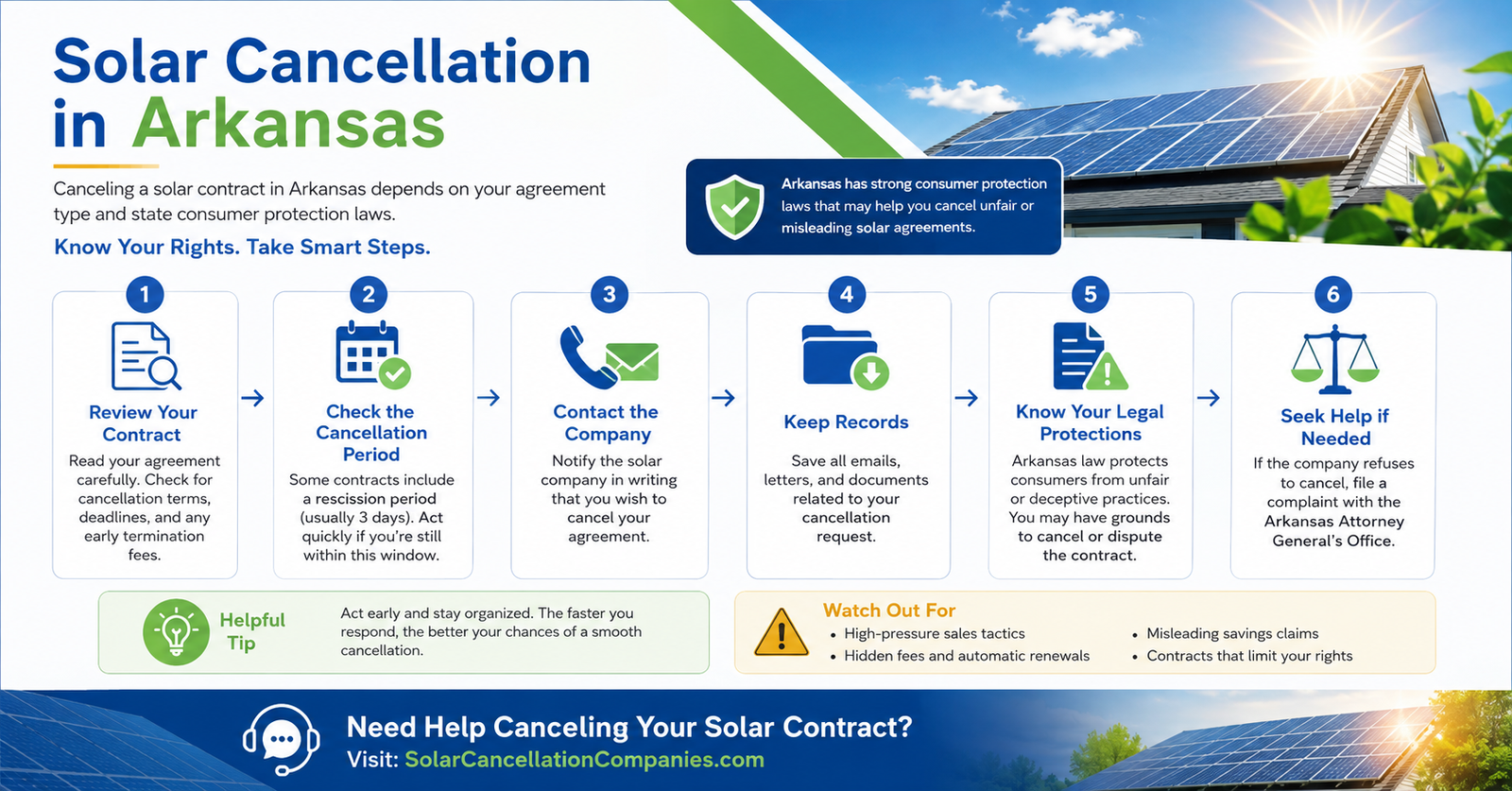
Your Right to Cancel a Solar Contract
Did you sign something you regret? You may have more time than you think.
The federal Cooling-Off Rule gives you three business days to cancel a contract signed at your home. Arkansas law may stretch that window to five business days for many home sales.
Did the installer skip your written cancellation notice? Your right to cancel may last much longer than the normal window. Missing paperwork is a real violation, not a small technicality.
State consumer law adds more protection. It covers false claims about savings. It covers fake utility partnerships. It covers misleading claims about tax credits or grants. If a company breaks these rules on purpose, you may recover real damages. A court can even triple that amount and add attorney fees.
The Arkansas Attorney General has already acted here. The office sent a public warning letter to solar companies. It called out pushy sales tactics and weak contracts, based on many consumer complaints.
Do you think you were misled? Gather your contract. Gather any sales recordings. Gather your utility bills. Then file a complaint with the Attorney General’s consumer protection team.
Watch for These Common Red Flags
Certain patterns show up again and again in Arkansas solar complaints.
- Claims that you will “never pay a power bill again.”
- Promises of a 30% tax credit for a system you plan to buy.
- False claims about a partnership with your electric utility.
- Yearly cost increases hidden inside the loan or lease terms.
- Pressure to sign the same day, with no time to think it over.
- A missing or incomplete cancellation notice.
Did your rep use two or more of these tactics? Slow down. Review the contract with someone you trust, and check it against our solar exit guides before you sign anything else.
HOA Rules and Selling a Home With Solar
Most Arkansas homeowner groups cannot ban solar panels outright. Many can still control where panels sit and how they look. Check your HOA rules early. Approval delays can push back your whole timeline.
Plan to sell a home with solar? Be clear about your financing type. Buyers often pause over a loan, lien, or lease they must take over. Clean paperwork makes the sale much faster.
Arkansas Solar Compliance Checklist
Use this list at every stage of your project.
- Before signing: check the installer’s licence, read the full contract, and ask about your real buyback rate.
- Before installation: confirm your permits are filed and your interconnection agreement is signed.
- During installation: take photos of your roof and equipment for your own records.
- Before activation: confirm your utility has granted permission to operate.
- After installation: save your warranty papers and track how your system performs.
What You Should Do Next
Have you not signed anything yet? Compare at least two Arkansas solar companies. Ask each one for your real buyback rate. Do not trust old 1:1 promises.
Did you already sign? Check your date right away. You may still be inside your cancellation window under state or federal law.
Has installation already started? Look at your exact stage first. Your options shrink once equipment ships or roof work begins.
Are you stuck in a dispute over workmanship, billing, or false claims? Write down everything. File a complaint with the Arkansas Attorney General or the Arkansas Public Service Commission.
Solar still makes sense for many Arkansas homeowners. The rules just need more care than they did a few years back. Read your contract closely. Ask direct questions about net billing and tax credits. Get real professional advice before you sign anything you cannot easily undo, or contact us for a free contract review if you want a second opinion before making any final decisions.
Frequently Asked Questions
1. Can I cancel a solar contract in Arkansas after signing?
Yes, you may be able to. If you signed the contract at your home, the federal Cooling-Off Rule generally gives you three business days to cancel. Arkansas law may extend that period to five business days for certain home sales. If the company failed to provide the required cancellation notice, you may have additional rights.
2. Do I still get the federal solar tax credit in Arkansas?
For most homeowner-owned solar systems purchased in 2026, the federal residential solar tax credit is no longer available. However, some leased or power purchase agreement (PPA) systems may still qualify for separate federal incentives claimed by the system owner rather than the homeowner.
3. Has net metering changed in Arkansas?
Yes. Arkansas replaced traditional 1:1 net metering with a new compensation system under Act 278. Most new solar customers now receive lower credits for excess electricity sent back to the grid, making battery storage and self-consumption more valuable.
4. Do I need a permit to install solar panels in Arkansas?
Yes. Most residential solar installations require building and electrical permits, local inspections, and utility approval before the system can operate. Your installer usually handles these requirements, but homeowners should confirm that all permits have been obtained.
5. Where can I file a complaint against a solar company in Arkansas?
If you believe a solar company used deceptive sales practices or violated your consumer rights, you can file a complaint with the Arkansas Attorney General’s Consumer Protection Division. Issues involving utility rules or interconnection may also be reported to the Arkansas Public Service Commission.