
Did you sign a solar contract in Connecticut and now regret it? You are not alone. Many homeowners feel stuck after the savings never came. Others were told things by a salesperson that turned out to be false. Knowing your rights under Connecticut solar contract cancellation laws is the first step.
This guide gives you clear, practical steps. It does not matter if you are still in your cancellation window or past it. Real options exist for both situations.
What Connecticut Homeowners Need to Know Before Cancelling a Solar Contract
What Is a Solar Contract?
A solar contract is a written deal between you and a solar company. It covers what work gets done, how you pay, and what both sides must do. Most Connecticut solar contract requirements include the install schedule, payment plan, and expected output.
Once you sign, you have real legal duties. Walking away without the right steps can cost you money.
Common Types of Solar Agreements in Connecticut
The type of deal you signed changes your rights. Here are the four main types:
- Solar loans: You borrow money to buy the panels. You own them but owe the debt.
- Solar leases: You rent the panels and pay a fixed monthly fee.
- Power purchase agreements (PPAs): You pay for the power the panels make, not the panels themselves.
- Cash purchases: You pay the full cost upfront and own the system outright.
Each type has different rules when it comes to cancellation or disputes. Our solar contract type guide explains how each one works and what your exit options look like.
Key Terms That Affect Your Cancellation Rights
Read your contract closely. Look for the rescission clause, early exit fee, and any UCC filing language. These terms shape your Connecticut solar cancellation rights more than anything else.
A UCC-1 lien means a security interest may be attached to your home. This can block a sale or refinance until the loan is paid off.
Why Homeowners Seek to Exit Solar Agreements
The most common reasons people want out are simple. The savings were not real. The utility bill did not drop. The salesperson made big promises that the contract never backed up.
Some homeowners felt rushed into signing. Others never got time to read the full contract. These are all valid reasons to look at your options. See our solar problems and complaints page for a full breakdown of the most common issues homeowners report.
Can You Legally Cancel a Solar Contract in Connecticut?
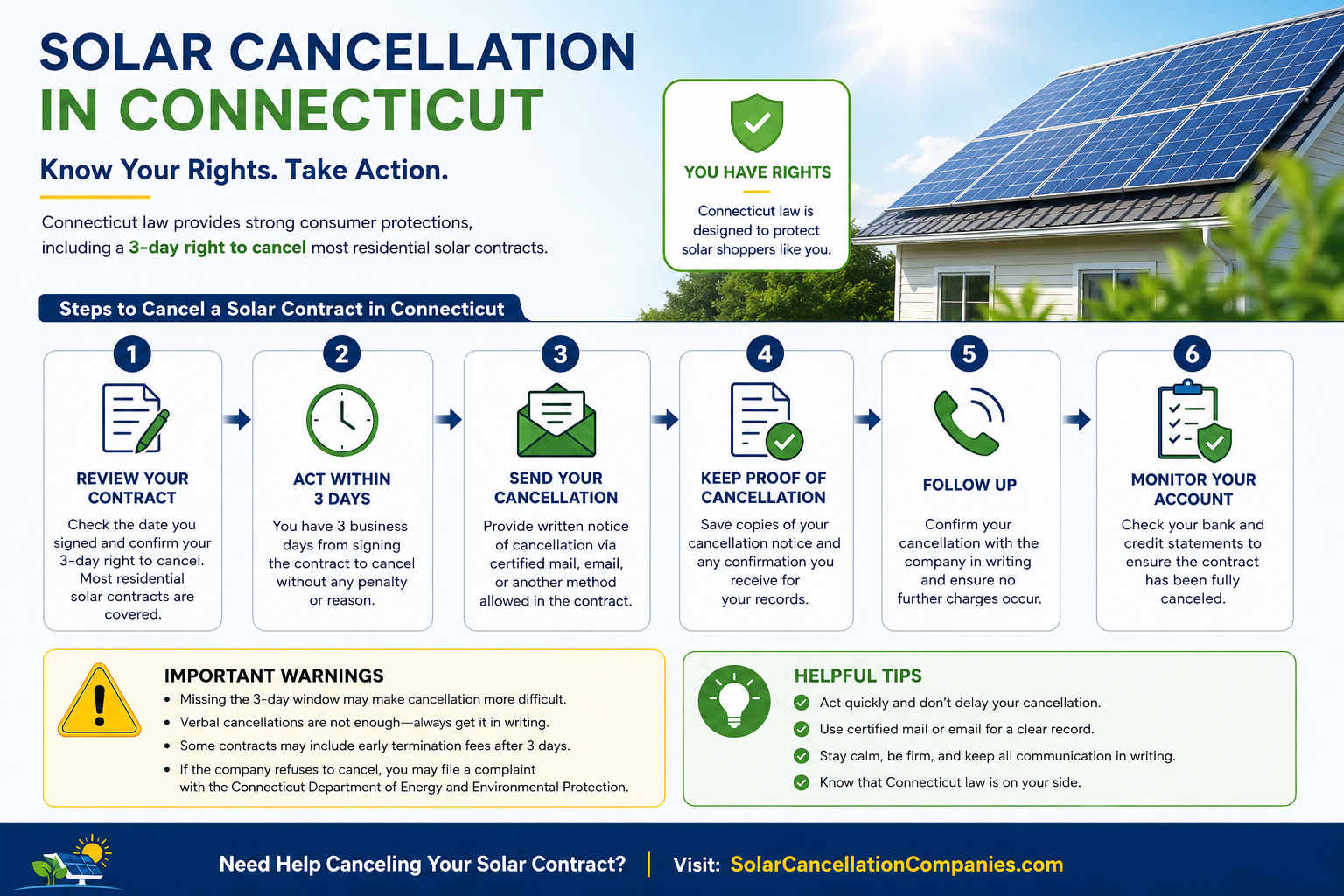
Short answer: Yes, in many cases. Connecticut law gives you three business days to cancel most home sales contracts. This is called the rescission period.
Connecticut’s Solar Contract Rescission Rules
The Connecticut Home Solicitation Sales Act gives you three business days to cancel solar contract Connecticut with no penalty. The seller must give you written notice of this right when you sign. If they skipped that step, your window to cancel may go beyond three days.
When the Right to Cancel Applies
You have this right when all four of these are true:
- The sale happened at your home or outside the seller’s normal place of business
- You signed after a salesperson visited you in person
- The total price is more than $25
- The seller gave you written notice of your right to cancel
Situations Where Cancellation May Still Be Possible After the Deadline
Even after the three-day window, you may still have a case. Connecticut solar consumer protection laws allow you to seek cancellation or money back when:
- A salesperson made false claims about savings or tax credits
- The company did not finish the install on time
- The contract had hidden fees that were not disclosed
- Loan terms were not clearly explained before you signed
These are legal grounds even if you signed months ago.
Circumstances That May Limit Your Cancellation Options
If the system is fully installed and working, and no one lied to you, cancellation gets harder. You may face exit fees and have to repay any money already disbursed.
Get a legal review of your contract before making any moves.
The Most Common Solar Contract Problems Reported by Connecticut Homeowners
Promised Savings That Never Happened
This is the top complaint by far. Sales reps often use high estimates to close deals. If your solar company misrepresentation Connecticut case involves false savings claims, you may have a fraud or deception case under state law.
Higher Utility Bills After Going Solar
Some homeowners end up paying both a solar loan and a utility bill every month. The savings were supposed to cancel out the loan cost. When that does not happen, something went wrong.
If your rep told you the utility bill would nearly disappear, that claim should be in writing. If it is not, document every bill you have paid since install.
Delayed or Incomplete Installations
Waiting months for work to finish is a real problem. An incomplete Connecticut solar installation complaint can be taken to PURA or the Attorney General if the company goes silent.
Misleading Sales Presentations
A verbal promise made during the pitch is not always in the written contract. Connecticut unfair solar sales practices break the Connecticut Unfair Trade Practices Act, known as CUTPA. This law lets you file complaints and go after damages.
Financing Terms Homeowners Did Not Fully Understand
Many people find out the real cost of their solar financing dispute Connecticut only after signing. Lenders must disclose all key terms. If they did not, you may have a separate legal claim against the lender.
Poor Customer Support After Signing
A company that goes quiet after install or refuses to honor its warranty is a common reason to file a complaint. Write down every time you tried to reach them and got no reply.
Connecticut Consumer Protections for Solar Customers
Protections Against Deceptive Sales Practices
CUTPA bans any unfair or dishonest act in trade or commerce. If a rep lied about savings, tax credits, or rate increases, that is Connecticut consumer fraud solar contract behavior under state law.
Consumer Rights Related to Solar Financing
The federal Truth in Lending Act, called TILA, requires lenders to show you all loan terms clearly. If your Connecticut solar contract requirements were not fully explained before you signed, you may have a case against the lender, not just the installer.
Contract Disclosure Requirements
Home improvement contracts in Connecticut must be in writing for any job over $200. The contract must name a start date, a finish date, a payment plan, and a total price.
If any of those items are missing, you may have grounds for a dispute.
Homeowner Rights When a Solar Company Fails to Perform
If a company takes your deposit and stops working, or installs a system that does not do what was promised, you have rights as a Connecticut homeowner solar rights holder under state contract law. You can ask for the work to be done, get a refund, or pursue money for your losses.
Understanding PURA’s Role in Solar Contract Disputes
What Is PURA?
PURA is the Public Utilities Regulatory Authority. It is the state agency that oversees Connecticut’s energy sector.
Complaints PURA May Review
- Net metering and utility connection issues
- Disputes between solar companies and utility providers
- Billing errors tied to solar production
- Problems with a solar firm that is also a licensed electric supplier
What PURA Can and Cannot Do
PURA can look into utility-related complaints and make companies respond. But it cannot enforce a private contract or pay you damages. A Connecticut PURA solar complaint works best when your problem involves billing errors, net metering, or connection delays.
When PURA May Be the Right Option
If your utility bill is wrong despite solar output, or if your system has not been connected to the grid on time, file solar complaint Connecticut with PURA first. You can do this online or by phone through the PURA consumer affairs line.
Understanding Attorney General Enforcement Actions
When the Attorney General Becomes Involved
The Connecticut Attorney General solar complaint process works differently from a PURA complaint. The AG looks for patterns of bad business behavior across many customers. One complaint may not trigger action, but many similar ones often do.
Solar Industry Violations That May Trigger Investigations
- False savings claims made to many customers
- Failure to disclose loan terms across multiple deals
- Targeting elderly homeowners with high-pressure tactics
- Pushing people to sign fast without time to read the contract
How Attorney General Actions Differ From Individual Complaints
The AG works for the public, not for you alone. Filing a Connecticut ag investigation solar contractors complaint does not mean you will get personal compensation. But it puts the company on record and can lead to action that helps many people at once.
What Homeowners Can Expect From an Investigation
AG cases take time. You may not hear anything for weeks or months. Your complaint adds to a larger file. If a settlement is reached, affected customers sometimes get relief, but it is not a sure thing.
How to Build a Strong Solar Complaint Case
Documents You Should Collect
- Your signed contract and any addenda
- Your loan or financing agreement
- All emails and texts with the solar company
- Any savings estimates shown during the sales visit
- Utility bills from before and after install
- Photos of the panels and any unfinished work
- A record of every payment you have made
Evidence That Strengthens a Complaint
- Written promises: Any email or text where the company promised specific savings
- Recorded pitches: A recording of the sales call can be very strong proof
- Witness statements: Anyone else who heard the sales pitch
- Bill comparisons: Side-by-side utility bills that show no change or higher costs
Mistakes That Can Weaken Your Case
- Waiting too long to file a formal complaint
- Only talking to the company by phone instead of in writing
- Signing new amendments without having them reviewed first
- Stopping loan payments without legal advice
Creating a Solar Complaint Checklist
Use this Connecticut solar cancellation checklist before you file:
- Gather every document listed above
- Write out a clear timeline of what happened
- List every promise that was not kept
- Note every time you tried to fix the issue directly
- Pick the right agency based on your specific problem
Solar Financing Issues That Create Cancellation Disputes
Solar Loans vs Leases vs PPAs
Each financing type works differently when a dispute comes up. A solar financing dispute Connecticut over a loan is between you and the lender. A lease or PPA problem is with the solar company. Knowing who you are dealing with matters before you file anything.
Whether Financing Remains After Contract Cancellation
Cancelling the install contract does not cancel your loan. If the money was already paid out, you still owe it. You may need to go after the lender separately or ask for a credit card chargeback if that is how you paid.
UCC Filings and Property Concerns
Some solar loans include a UCC-1 filing, which puts a lien on your home or the equipment. This can block a sale or a refinance. To clear it, you usually need to pay off the loan or work out a release with the lender.
Financing Disputes Based on Misrepresentation
If the rep lied about the loan terms, you may have a case under TILA or CUTPA. Write down exactly what you were told and compare it to what the contract says. This kind of solar contract dispute Connecticut usually needs a lawyer to resolve well.
What Happens If Your Solar Company Stops Responding?
Unfinished Projects
If the company left your install half done, send a written demand letter first. Set a firm deadline for them to respond. If they go quiet, take the complaint to the Department of Consumer Protection and file a Connecticut solar installation complaint right away.
Warranty and Service Problems
A company that ignores warranty calls may be in breach of contract. Connecticut home improvement contractor laws give you legal tools to handle this.
Contractor Bankruptcy or Business Closure
If your solar company shut down, your options get smaller but do not disappear. You may be able to file a claim against their contractor bond. You can also pursue the financing company directly or ask the AG’s office for help.
Options Available to Connecticut Homeowners
- File a complaint with the Department of Consumer Protection
- Report to the Connecticut Attorney General
- Contact the loan company and ask to pause payments while the dispute is open
- Talk to a consumer protection attorney
Step-by-Step Process for Resolving a Connecticut Solar Contract Dispute
A Numbered Action Plan
- Read your contract and loan papers carefully. Find every rule about cancellation, fees, and deadlines.
- Contact the solar company in writing. Use email or a certified letter. Describe the problem and ask for a fix.
- Save copies of every message. Keep a log of dates and what was said.
- File a Connecticut PURA solar complaint if the issue involves billing, net metering, or grid connection.
- Submit a Connecticut AG solar complaint if the company used false or deceptive sales tactics.
- File with the Department of Consumer Protection if the company holds a contractor license.
- Talk to a consumer protection attorney if the company refuses to budge or the money at stake is large.
FAQS
Can I cancel after the rescission period ends?
You may still cancel solar contract Connecticut if the company broke the deal, made false claims, or failed to deliver what was promised. These grounds do not depend on the three-day window.
Can PURA force a refund?
No. PURA does not have the power to award money in private contract cases. It can look into utility-related issues but cannot order a solar company to pay you back.
Can I file multiple complaints?
Yes. You can file with PURA, the Attorney General, and the Department of Consumer Protection at the same time. Each agency covers a different piece of the problem.
What happens to my solar loan?
Cancelling the install contract does not end your loan. You may need to work out a deal with the lender directly or get legal help to resolve both sides of the dispute at once.
What if the company goes out of business?
Contact the Department of Consumer Protection and check whether the company had a contractor bond. File with the AG’s office and speak with an attorney about your options with the financing company.
Conclusion: Protecting Your Rights Under Connecticut Solar Contract Cancellation Laws
Your next step depends on where you are right now. Here is clear guidance for each common situation.
The solar company stopped responding: Send a written demand letter with a clear deadline. File with the Department of Consumer Protection right after. If the install is not done, you have a solid breach of contract claim.
When PURA makes sense: File a Connecticut PURA solar complaint when your problem is about billing errors, net metering gaps, or a slow grid connection from your utility provider.
When the Attorney General is the right call: Reach out to the Connecticut Attorney General solar complaint office when a company used deceptive tactics or when more than one customer was harmed the same way. The AG goes after industry-wide misconduct.
Connecticut solar contract cancellation laws give real tools to homeowners in bad deals. The key is knowing which tool fits your case and using it the right way.
Visit Solar Cancellation Companies for a free case review and more help with your solar exit options.