

Solar can cut your power bill for years. It can also cause trouble if you sign the wrong contract. Or skip a permit step. Delaware Solar Panel Laws protect you at every stage. They cover your first sales visit. They cover the day your system turns on. This guide breaks down what the rules mean for your wallet and your roof. It also flags the mistakes that cost homeowners the most, and resources like Solar Cancellation Companies exist to help you sort through them if something already feels wrong.
Delaware Solar Panel Laws at a Glance
Solar is legal across the whole state. Delaware solar regulations cover contracts, permits, utility hookups, and homeowner rights. Here is the short version.
- Solar panels are legal statewide. No county can ban them.
- Delaware sets Delaware net metering rules that credit extra power at the full retail rate.
- The state runs an SREC market. It pays you for every megawatt hour your panels make.
- You can often cancel a door to door solar deal within 3 business days.
- HOAs cannot ban solar outright, though they can set placement rules.
Knowing these basics before you meet an installer puts you in a stronger spot.
Your Rights Before You Sign a Solar Contract
Delaware treats a solar deal like any major home purchase. You deserve clear terms. Under Delaware solar consumer rights rules, your installer must give you a written contract. It must list the full price. It must list financing terms. It must list the equipment brand, the warranty length, and your cancel window, all in plain language.
Ask These Questions Before You Sign
- What is the exact system size, and how did you calculate it?
- Who pays if the roof gets damaged during install?
- Is this a loan, a lease, or a power purchase deal? Who owns the panels?
- Does the price cover permits, inspections, and utility fees?
- What happens to my contract if I sell my house first?
Never sign during a first visit. A good installer will let you take the papers home.
Can You Cancel a Solar Contract in Delaware?
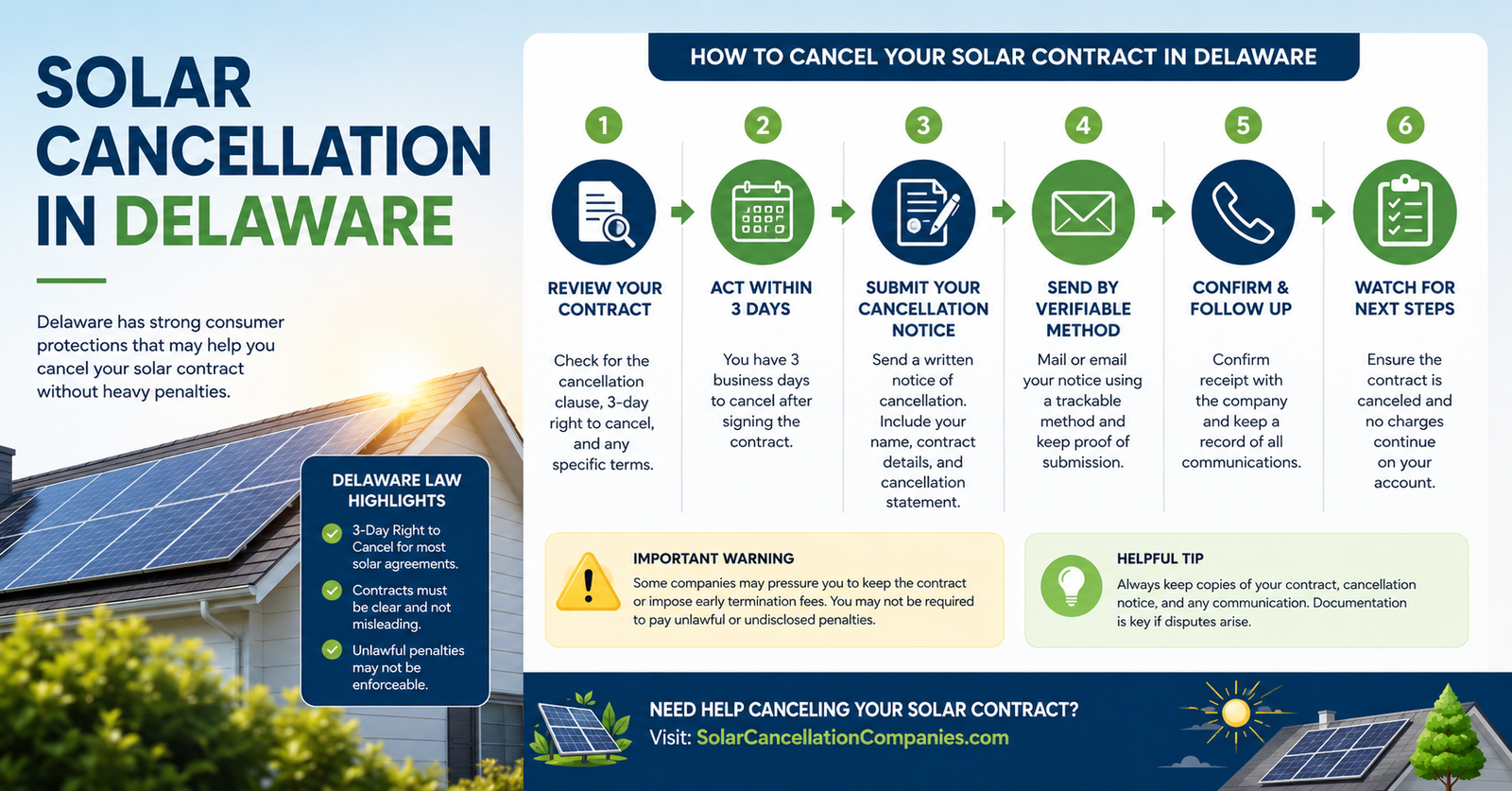
Yes. Delaware’s Home Solicitation Sales Act gives you a real Delaware solar contract cancellation law to use. This applies if a salesperson signed you up at home. You can cancel, with no penalty, until midnight of the third business day after you sign.
How To Cancel a Solar Contract
- Looking into how to cancel solar contract Delaware style? Send written notice to the seller’s address on the contract.
- Use mail, email, or hand deliver the notice.
- Keep a copy and proof it was sent.
- The seller must refund you within 10 business days.
- Any loan tied to the deal must be cancelled too.
What if financing is already approved? What if permits are filed? The 3 day window still applies. Once it closes, cancellation depends on your contract terms. Read the fine print on early exit fees. If a company refuses a valid cancellation request, that may break state law. You can file a complaint with the Delaware Consumer Protection Unit.
Delaware Solar Permit Requirements
Every grid tied system needs local approval first. Delaware solar permit requirements usually mean an electrical permit. Roof work may need a building permit too.
Delaware Solar Permit Checklist
- Your installer should pull the permit as part of a standard Delaware solar permit checklist, not you
- Plans should show panel layout, wiring, and roof load details
- A final check confirms the system meets local codes
- Delays often come from missing paperwork or a busy inspector
The Delaware solar inspection process happens after install, before your utility grants power. Build extra time into your Delaware solar installation timeline.
Net Metering and Utility Interconnection
Delaware requires net metering. Extra power your panels send to the grid earns a credit. That credit matches your normal power rate. Credits roll over month to month. You can ask for a payout once a year.
State law once capped net metering at 8 percent of peak demand. In 2026, lawmakers passed Senate Bill 239 to remove that cap. House Bill 269 also updated Delaware solar interconnection requirements. Now utilities must credit extra power. They cannot let it expire. Utilities have until December 1, 2026 to update their billing systems. Ask your installer if your utility has made the switch yet.
Interconnection is a safety check. Your utility runs it before you can turn your system on. Once it passes, you get Permission to Operate, called PTO. That is your green light to use the panels. Delays usually come from paperwork, not from your equipment.
Delaware Solar Tax Incentives
The federal 30 percent solar tax credit was called Section 25D. It ended for systems installed after December 31, 2025. If you buy solar in 2026, there is no federal credit at tax time. A solar lease may still help. A power purchase deal may still help too. The financing company can claim a separate credit and pass some savings on to you.
State level Delaware solar tax incentives help close some of that gap. Delaware has no state sales tax. That means no extra tax on your panels. It means no extra tax on your install cost either. There is no statewide law that promises a Delaware solar panel property tax exemption. But most local areas will not raise your home’s tax value just for adding panels. Delaware also runs an SREC market. It pays you for every megawatt hour your system makes. That is on top of your monthly bill savings.
Delaware HOA Rules for Solar Panels
State law limits how far an HOA can go. Under Delaware solar panel HOA rules, a board cannot ban solar outright. It can ask for a design review. It can set placement rules. It can set screening rules too. But those rules cannot raise your cost by much. They cannot cut your system’s output much either. Apply early. Keep every approval in writing.
Red Flags and Common Sales Tactics
- Claims of a free federal or utility funded solar giveaway
- Pressure to sign the same day someone knocks on your door
- Vague savings numbers with no real bill comparison
- A contractor who will not show a Delaware business license
When you search for Delaware solar contractors near me, check for real reviews, a real office address, and proof of insurance before you request a quote. Our solar exit guides also cover the sales tactics that lead to the most homeowner complaints, if you want a closer look before you commit.
Delaware Solar Compliance Checklist
| Stage | What To Check | Why It Helps |
| Before signing | Written quote, warranty, financing terms, cancel notice | Protects your money up front |
| Before install | Permit pulled, HOA approval, utility application filed | Avoids delays and fines |
| During install | Photos of work, crew ID, roof condition notes | Backs you up in a dispute |
| Before activation | Inspection passed, interconnection agreement signed | Required for Permission to Operate |
| After completion | Permits, warranty papers, and PTO letter saved | Needed for resale or claims |
Frequently Asked Questions
Are solar panels legal in Delaware?
Yes. Panels are legal statewide under Delaware residential solar laws. No town can ban them.
Does Delaware have net metering?
Yes. Delaware credits extra solar power at the full retail rate. Credits roll over each month.
Can I cancel a solar contract?
Most homeowners can cancel within 3 business days of signing, with no penalty, under state law.
What permits are required?
Most jobs need an electrical permit and a final check. Roof work may need a building permit too.
Can an HOA stop solar panels?
No. An HOA can set placement rules, but it cannot issue a full ban on solar.
Who pulls the permit?
Your licensed installer usually pulls the permit for you.
How long does approval take?
It varies by county and utility. Most homeowners wait a few weeks to a few months.
Final Thoughts
Learn solar panel laws in Delaware before you sign anything. That is the best way to guard your money and your roof. Read every contract line by line. Confirm who is pulling the permit. Ask direct questions about financing. Remember, a 3 day cancel window may apply if you change your mind. Already signed something that feels off? A missed permit, a refused cancellation, or a hidden fee? Do not wait. Gather your papers, note every date, and compare vetted specialists through our company lookup or contact us for a free contract review before a deadline passes. A little care now can save years of stress and real money later.