

Hawaii has one of the highest solar rates in the country. High power bills push many families to go solar. But solar means signing a contract worth thousands of dollars. That is why you need to know Hawaii solar panel laws before you sign, and why homeowners who feel unsure about a contract they already signed often turn to resources like Solar Cancellation Companies for a clearer picture of their options.
This guide covers permits, net billing, tax credits, and your cancellation rights. You will learn how to spot a bad contract early. Think of this as a friendly checklist, not a sales pitch.
Quick Summary
Hawaii no longer offers net metering. Most homes now use net billing instead. The federal tax credit ended for owned systems bought in 2026. Licensed contractors must pull permits before work starts. You get three business days to cancel most home sales deals. Utility approval can take several weeks. Read every page before you sign, especially the cancel and payment terms.
Understanding Hawaii Solar Regulations
Hawaii solar regulations cover three main areas. These are permits, utility hookup, and your contract. The Hawaii Public Utilities Commission sets utility rules. County offices handle permits and inspections. Each island utility sets its own rates and forms.
These rules exist to protect you. A missed permit can delay your project for months. It can also leave your home exposed to wiring hazards or fines.
Hawaii Solar Permits and the Installation Process
Hawaii solar permits are required before any panel goes on your roof. Your installer usually files building and wiring permits with the county. Still, ask to see proof that permits are filed under your address.
A typical project moves through five steps. First, a team checks your roof and plans your system. Second, your installer files permit forms with the county. Third, the county reviews the plans and signs off. Fourth, crews install the system, and the county checks the work. Fifth, your utility grants final approval to turn the system on.
Wait times vary by county and season. Honolulu solar permit requirements can take two to six weeks during busy months. Delays often come from missing forms or roof conflicts. Ask your installer for a written timeline. Check in every two weeks.
Hawaii Net Billing Rules Explained
Hawaii net billing rules replaced the old net metering plan years ago. Under net billing, extra power you send to the grid earns a credit. That credit is lower than the rate you pay for power. Export credit rates now run between fifteen and twenty eight cents per unit, based on your island and time of day.
This means using your own power saves you more than sending it out. A battery can help you save daytime power for night use. Ask any installer to show you real export rates for your home, not a rough guess.
Hawaii Solar Tax Credit Update for 2026
The hawaii solar tax credit rules changed this year. The federal thirty percent credit for owned systems ended for any system placed in service after December 31, 2025. If you buy or finance your own system in 2026, you cannot claim that federal credit.
Leased systems may still pass along some savings. That is because the leasing company can claim a separate business credit. Hawaii still offers a property tax break for solar in some counties, including Honolulu. Always check current rules with your county tax office first.
| Common Mistake
Many homeowners still think the old thirty percent credit applies. Check your install date and payment plan before you count on any tax break. |
Can You Cancel a Solar Contract in Hawaii
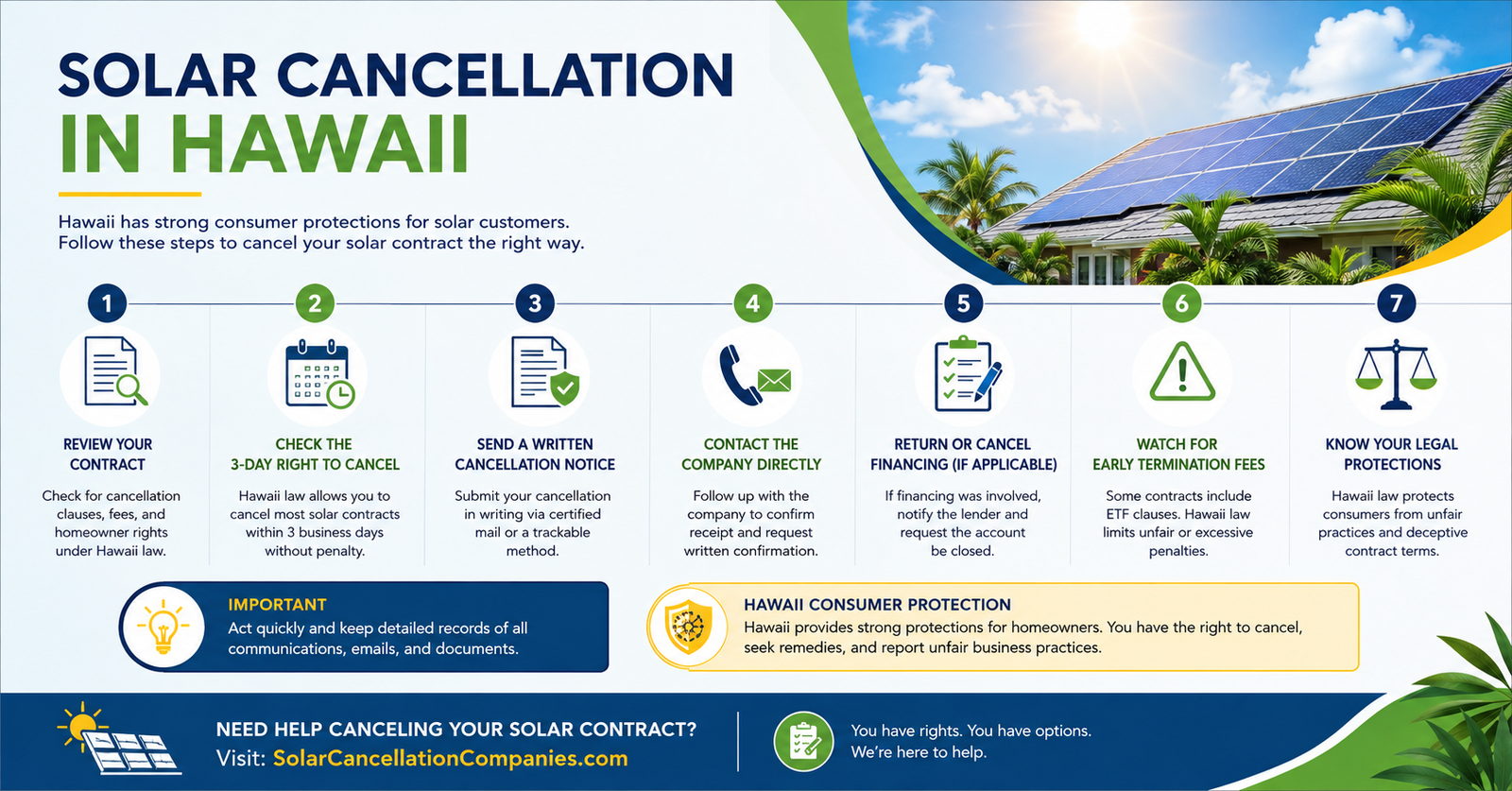
Yes, in most cases you can. Hawaii solar contract cancellation rights come from state and federal law. If you signed at home or off site, you get three business days to cancel for any reason. This is your hawaii solar contract cooling off period.
To cancel, send a written notice before midnight of the third business day. Certified mail with a return receipt gives you solid proof. Keep a copy of your contract, the cancel form, and your mail receipt.
If your installer never gave you a cancel form at signing, your clock may not have started. That gap can leave your right to cancel open much longer than three days. You may also cancel later if the company oversold your savings or missed key deadlines.
If a company will not honor your cancel notice, do not stay quiet. Save every call and email. File a complaint with the Hawaii Office of Consumer Protection. A consumer lawyer can also review your contract for problems. This protects your hawaii solar homeowner rights.
| Expert Tip
Never sign a contract the same day a sales rep visits your home. Take the papers home. Read every page in daylight first. |
Avoiding Solar Scams in Hawaii
Watch for savings claims that sound too good to be true. Fake tax credit promises are common now that federal rules changed. Be wary of any seller who rushes you to sign fast. Use this hawaii solar permit checklist before you sign.
- The installer holds a valid Hawaii solar contractor license.
- Your contract clearly explains your cancellation rights in writing.
- The installer discloses all loan terms, fees, and potential rate increases.
- The contract clearly states who is responsible for obtaining permits.
- The warranty covers both equipment and workmanship.
Is Solar Worth It in Hawaii Right Now
Solar can still pay off in Hawaii, since power costs stay high here. These hawaii solar installation requirements mean the math looks different in 2026 without the owner tax credit. If your roof needs work soon, fix it before you install panels. If you plan to sell your home soon, learn how your loan or lease moves to a buyer.
Homes with high daytime power use often see faster payback. Homes that use more power at night may want to weigh battery costs first.
Frequently Asked Questions
Can I still get a tax credit for solar in Hawaii?
If you buy or finance your own system in 2026, you cannot claim the federal credit, since it ended after 2025. Leased systems may still carry some savings. Local property tax breaks may still apply where you live.
What happens if my solar company shuts down?
Your gear warranty may still stand with the maker, even if your installer closes. Your loan or lease payments still continue, so keep all your papers close and call your lender right away.
Do I need a permit for a small roof system?
Yes. Almost all grid tied roof systems in Hawaii need a building permit and a wiring permit, plus utility sign off.
How long does final utility approval take?
Wait times vary by utility and island. Many homes wait several weeks after the final check. Delays often trace back to missing hookup forms.
What should I keep after install?
Keep your signed contract, permit papers, check reports, warranty forms, and your final approval letter in one folder.
Your Next Step
Before you sign, check the seller’s license, read the cancel clause twice, and confirm current tax rules with a pro. If you already signed and feel unsure, check your dates first. You may still be inside your cancel window. If not, save your records and compare vetted specialists through our company lookup, or contact us directly for help. A little care now protects your home and your budget for years to come.