
Thinking about solar in Vermont, or wondering if you can get out of a contract you just signed? Vermont solar panel laws combine state statutes, Public Utility Commission rules, local permits, and federal consumer protections. This guide covers what actually applies to your situation, whether you are comparing quotes, reviewing a new contract, or trying to cancel one. You will learn what the law says and what to do next, and resources like Solar Cancellation Companies can help if you land in that last group.
Vermont Solar Panel Laws in 2026: What You Need to Know
The Vermont Public Utility Commission, known as the PUC, regulates net metering, interconnection, and utility tariffs. The Vermont Attorney General’s Consumer Protection Unit enforces the state’s Consumer Fraud Act against unfair or deceptive sales practices. Your town handles building and electrical permits; federal agencies like the FTC step in on misleading advertising and financing.
Vermont solar laws 2026 apply statewide, but permitting details, interconnection paperwork, and net metering rates vary by utility and town. Knowing which office handles your specific issue saves time and frustration.
Do You Need a Permit for Solar Panels in Vermont?
Yes. Almost every grid-connected solar installation needs a local electrical permit plus utility interconnection approval. Vermont solar permit requirements and Vermont solar installation requirements typically include:
- A local building and electrical permit
- A net metering registration or Certificate of Public Good from the PUC
- A signed interconnection agreement with your utility
- Proof that your installer holds the correct electrical license
Processing time depends on system size, your utility’s queue, and whether your town requires zoning review. Larger or ground-mounted systems usually take longer than a standard rooftop array.
Vermont Solar Contract Rules and Red Flags
Vermont solar contract rules require clear terms on price, financing, timeline, and equipment. Before you sign, review your Vermont solar contract documents carefully, including the sales agreement and any loan or lease paperwork. These are often separate contracts, even when one salesperson handles both.
Watch for these red flags:
- “Free solar” claims with no clear ownership terms
- Savings promises based on a tax credit that no longer applies
- Pressure to sign the same day
- Verbal promises missing from the written contract
- Blank fields or vague dealer fees
- Unclear cancellation language
One key fact for 2026: the 30 percent federal residential solar tax credit expired for systems placed in service after December 31, 2025. If a salesperson mentions this credit, ask exactly how it still applies to your specific purchase.
Can You Cancel a Solar Contract in Vermont?
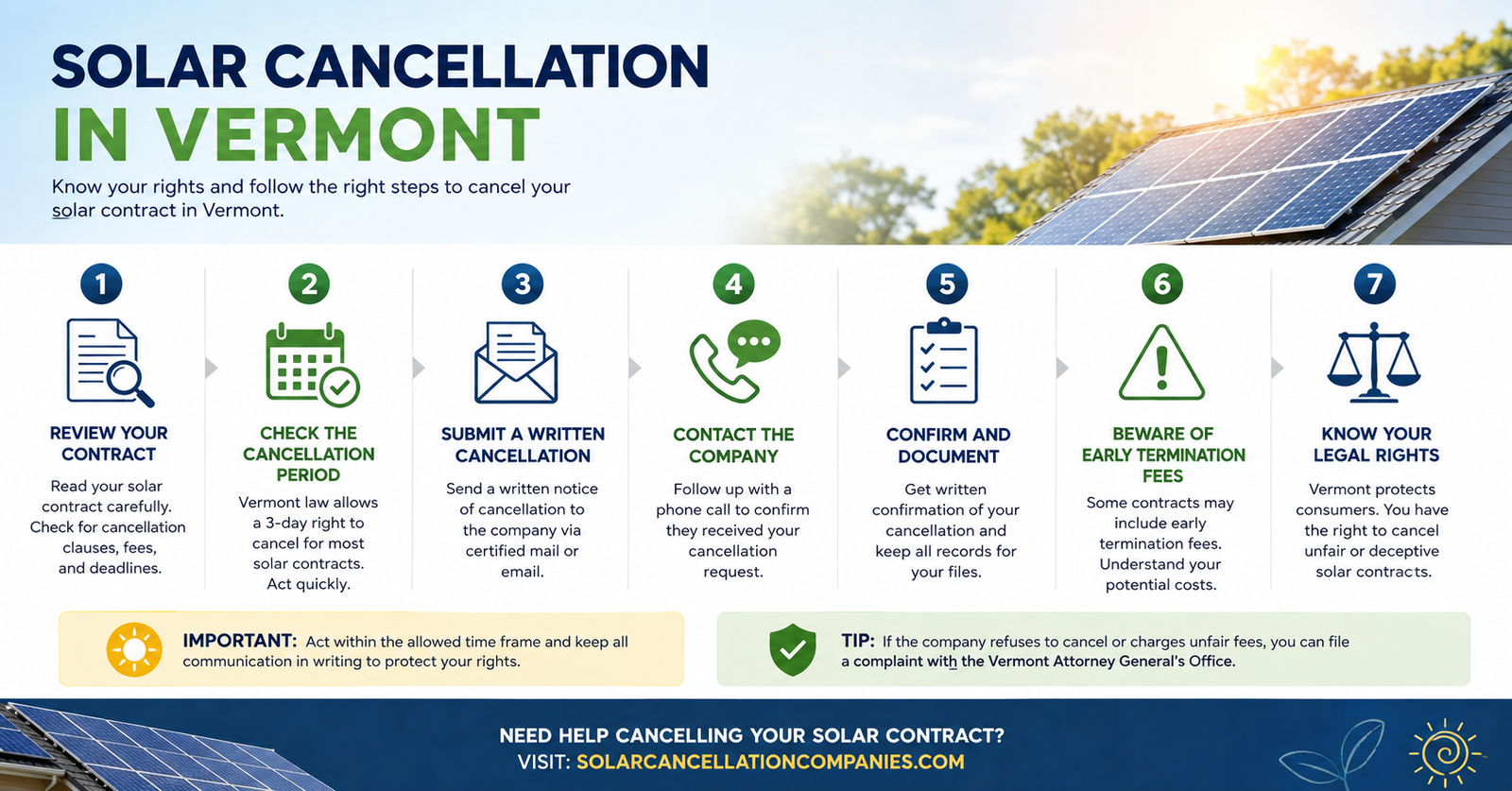
Often, yes. Your Vermont solar cancellation rights depend on how and where you signed. Vermont’s Home Solicitation Sales Act gives you three business days to cancel if a salesperson signs you up at your home, rather than at their regular place of business.
Vermont solar contract cooling-off period: the seller must hand you a completed cancellation notice at signing. If they never do, your right to cancel can last well beyond three days.
Vermont solar cancellation timeline: the three-day clock starts when you receive that notice, not necessarily the day you signed.
Can you cancel after the cooling-off period passes? Sometimes. Check the contract’s own cancellation terms and whether the sale involved misleading claims. A missed deadline is not always the end of your options.
Cancelling after installation is harder. Once panels are on your roof, you are usually facing a contract dispute rather than a simple cancellation.
How to Cancel a Solar Contract in Vermont
Follow these steps if you plan to cancel a solar contract Vermont rules allow for:
- Find the cancellation section in your signed contract.
- Confirm your deadline based on your signing date and notice date.
- Review your loan or lease agreement separately.
- Write a clear, dated cancellation notice.
- Send it the way your contract requires.
- Keep proof of delivery, such as certified mail.
- Ask the seller to confirm your cancellation in writing.
- Follow up with your lender if financing was involved.
What If the Solar Company Refuses to Cancel?
Put everything in writing and keep a paper trail. If installation starts after you send a valid cancellation notice, document every date carefully. That work may not be authorized.
If the company stops responding, contact your lender directly. Your loan and your installation contract are usually separate agreements. You can file a complaint with the Vermont Attorney General’s Consumer Assistance Program, which mediates Vermont solar installer complaints and other disputes between Vermont consumers and businesses. For a serious Vermont solar contract dispute, our solar exit guides walk through similar escalation paths, or a consumer protection attorney can review your specific paperwork.
Vermont Solar Loan and Financing Problems
Vermont solar financing risks include long repayment terms, dealer fees folded into your loan, and monthly payments based on tax assumptions that may no longer hold in 2026.
Vermont solar loan cancellation is possible in some cases, but cancelling your installation contract does not automatically cancel your loan. These are usually two separate legal agreements, even when the same salesperson handled both.
Does cancelling solar cancel the loan automatically? No. Contact your lender in writing and confirm the loan is fully closed. If it stays active and collection notices arrive, keep records of every cancellation attempt you made.
Vermont Net Metering Rules
Vermont solar net metering rules let you earn bill credits for extra electricity your system sends to the grid. Credits use a statewide blended rate set by the PUC, not your utility’s full retail rate, and that rate resets every two years. Category-based adjusters can raise or lower your specific credit. Ask your installer to show you the current rate before trusting their savings estimate, since some sales projections use outdated numbers.
Selling a House With Solar Panels
If you own your system outright, it typically transfers with the home at sale. An active loan usually needs to be paid off or transferred before closing. A Vermont solar lease cancellation or transfer needs approval from the leasing company. Ask for a payoff or transfer letter before you list your home, so it does not stall your sale.
Frequently Asked Questions
Can I cancel a solar contract in Vermont?
Often yes, especially if you signed at home rather than the seller’s place of business. You generally get three business days once you receive the required cancellation notice.
Does Vermont have a solar cooling-off period?
Yes, generally three business days for home solicitation sales, starting when the seller gives you the legally required notice.
Can I cancel after installation starts?
It gets harder. You are likely dealing with contract terms or a dispute rather than a simple cancellation.
Does cancelling my contract cancel my loan?
Not automatically. Contact your lender separately and get written confirmation the loan is closed.
Do I need a permit for solar panels in Vermont?
Yes, in nearly every case. You will need a local electrical permit and utility interconnection approval.
Where can I file a complaint against a solar company?
Start with the Vermont Attorney General’s Consumer Assistance Program, which mediates disputes with Vermont businesses.
What Vermont Homeowners Should Do Next
If you have not signed yet, compare cash and financed pricing, confirm the current net metering rate, and ask exactly what tax benefits still apply in 2026. If you just signed, find your cancellation deadline today.
If you want to cancel, put it in writing, send it the way your contract requires, and handle financing separately.
If your deadline passed, do not assume you are out of options. Review the contract for other issues.
If your loan is still active, confirm that in writing with your lender.
At Solar Cancellation Companies, we provide support to homeowners seeking solar cancellation help in Vermont, especially with contract disputes and financing concerns. If you need solar contract help in Vermont or are looking for a solar cancellation company in Vermont, we can review your situation and help you understand your available options.
This article is general information, not legal advice. Solar Cancellation Companies is not a law firm. For advice on your specific contract, talk with a licensed Vermont attorney or contact us to review where you stand.