

More Georgia homeowners are looking for a way out of their solar contracts in 2026. Promises of lower bills and easy savings did not always come true. The Georgia Attorney General has even issued public warnings about misleading solar sales tactics.
This guide will help you understand what you agreed to, what Georgia law says, and what steps you can take next.
What Is a Solar Contract and What Are You Agreeing To?
A solar contract is a written deal. You buy, lease, or finance a home solar system. It sets your payments, duties, and exit options. Knowing the Georgia solar contract requirements helps you read it clearly.
Types of Solar Agreements in Georgia
- Solar loans: You borrow money and own the panels.
- Solar leases: You rent the system for a monthly fee.
- Power purchase agreements (PPAs): You pay for the power the system makes.
- Cash purchase contracts: You pay upfront and own it outright.
Georgia’s 2015 Solar Power Free-Market Financing Act opened the door to leases and PPAs. These deals can be hard to read. Our solar contract type guide breaks down each agreement type in plain language so you can identify exactly what you signed and what it means for your rights.
Key Terms Homeowners Often Overlook
These clauses affect your solar cancellation timeline and how much it may cost to walk away.
- Cancellation clauses: What triggers a fee and how large it is.
- Financing obligations: Whether you still owe loan payments if the system underperforms.
- Arbitration provisions: Many contracts take away your right to sue in court.
- Performance disclaimers: Language that limits what the company owes you if savings fall short.
- Transfer and resale restrictions: Rules about selling your home or refinancing with the contract in place.
Can You Cancel a Solar Contract in Georgia?
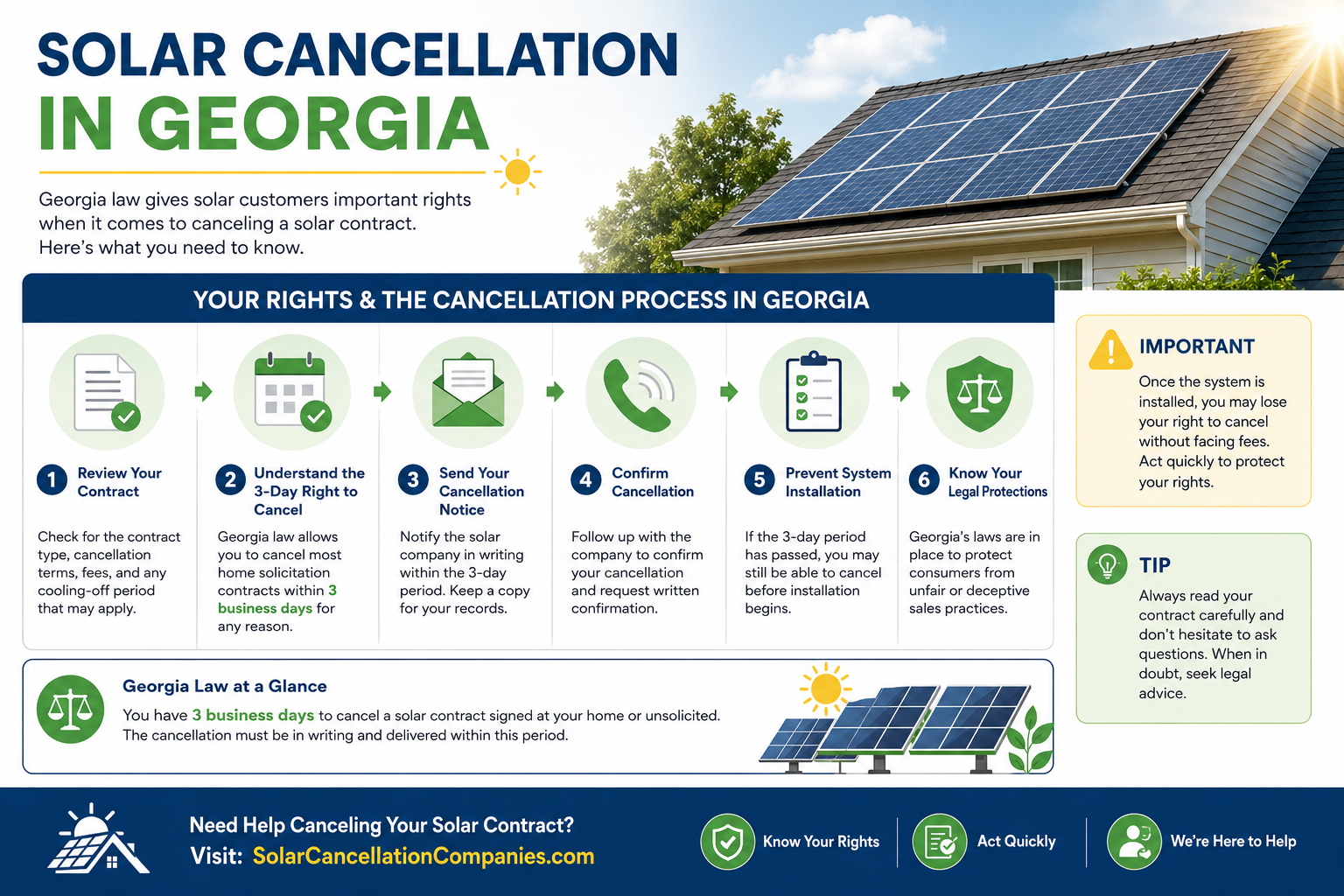
The Georgia Solar Cancellation Timeline
Your options depend on when you act. Here is a clear breakdown.
| Stage | What You Can Do |
| Within 3 business days of signing (door-to-door sale) | Cancel for free under the FTC Cooling-Off Rule. Saturday counts as a business day. |
| Within 30 business days (contracts over $10,000 with tax credits) | Georgia law expanded rights in July 2023. This window often stretches past six full calendar weeks. |
| Before installation begins | Cancellation is possible with written notice. Fees may apply depending on your contract. |
| After permits are filed | More complex. Permit costs may come into play. Read your contract closely. |
| After installation is complete | Hardest to cancel. Legal grounds like misrepresentation may still apply. |
Georgia updated its rules in July 2023. For solar contracts above $10,000 that involve federal tax credits, you may have a 30 business day cancellation window without penalty. That is not 30 calendar days. It excludes weekends and holidays, so it often runs past six full weeks.
If the company never gave you that notice in writing, your cancellation window may not have started yet.
Factors That Affect Your Cancellation Rights
- How the sale took place (at your home vs. a showroom)
- Whether you received a written cancellation notice from the company
- What stage the project is in right now
- Whether your loan has already been funded
- The exact wording of your signed agreement
For a broader view of how Georgia compares to other states, our solar state laws page covers cancellation windows and consumer protections across the US.
How the Georgia Fair Business Practices Act Applies to Solar Contracts
The Georgia Fair Business Practices Act (O.C.G.A. Title 10, Chapter 1, Article 15) makes unfair and deceptive business practices illegal. The Georgia Attorney General’s Consumer Protection Division enforces it. The Georgia fair business practices act solar connection is direct.
What the Law Prohibits
The Act bars companies from making false claims about a product, hiding key terms, and using pressure tactics to push someone into signing. It applies to solar sales.
Solar Sales Practices That May Raise Consumer Protection Concerns
The Georgia AG has directly warned homeowners about these practices.
- False savings claims: Telling you that you will have zero electric bills or save a set dollar amount, without putting it in writing.
- Misleading tax credit information: Overstating the value of the federal Investment Tax Credit or who qualifies for it.
- High-pressure solar sales tactics: Saying the deal expires today or that you must sign right now.
- Hidden fees: Dealer charges or escalator clauses buried deep in the loan paperwork.
- Incomplete disclosures: Not explaining your right to cancel or the full cost of the loan.
When a Complaint May Be Worth Considering
If a salesperson made promises that never appeared in your contract, if your bills are still high after install, or if no one told you about your cancellation rights, the Fair Business Practices Act may apply to your case.
The 5 Biggest Reasons Georgia Homeowners Try to Cancel Solar Contracts
1. Utility Bills Remain Higher Than Expected
Many homeowners were told their electric bill would go away or drop sharply. The Georgia Attorney General has confirmed that solar customers still pay their utility for grid access and nighttime power.
If no one explained that to you clearly, it may count as a misleading solar savings claim.
2. Financing Costs Were Not Fully Explained
Solar loans often include dealer fees added to the loan principal. These can run 20 to 30 percent above the system cost. If these fees were not disclosed under the Truth in Lending Act (TILA), that may open a path to rescission. This is where many solar contract dispute cases begin. Lenders like GreenSky, GoodLeap, and Mosaic each have specific loan terms worth reviewing if your financing was through one of them.
3. Promised Savings Never Materialized
If your system produces less power than projected and there is no written guarantee, you still owe loan payments. Comparing your actual utility bills to the original savings estimate is often the strongest piece of evidence in a dispute.
4. Installation Delays and Project Issues
Permits pulled but work stalled. Wrong equipment installed. No contact after you signed. These are all breach of contract situations. Document them with dates and photos.
5. Concerns About Selling or Refinancing the Home
Leases and PPAs can slow a home sale or block refinancing. PACE financing puts a lien on your property. Some buyers walk away when they see a solar contract tied to the home. The Georgia Attorney General advises homeowners to understand solar financing problems and transfer terms before they sign.
What To Do Before Filing a Complaint
Review Your Contract
Pull out every document you signed. Look at the Georgia solar contract requirements around cancellation fees and financing. Note what the contract says versus what the salesperson told you.
Gather Supporting Documentation
Strong evidence makes a complaint work. Collect these items.
- All signed contracts and loan documents
- Every email, text, and voicemail from the solar company
- Sales brochures or printouts shown during the pitch
- Utility bills from before and after installation
- Photos of the installed system
- Notes from the sales visit, including the exact date
Compare Written Terms to Sales Promises
This step is the core of most solar disputes. If the salesperson promised monthly savings that never showed up in writing, that gap is your key piece of evidence.
Create a Timeline of Events
List each key date. When were you first contacted? When did you sign? When were permits pulled? When did problems start? A clear timeline supports every complaint you file.
Solar Contract Cancellation Checklist
- Find and read every document you signed
- Note the sale date and how the sale took place
- Check whether the company gave you a written cancellation notice
- Gather utility bills from the past 12 months
- Write down every verbal promise not in the contract
- Check for liens or UCC-1 filings at your county recorder’s office
- Get professional help before signing anything new
How To File a Solar Complaint in Georgia
Step 1: Contact the Solar Company
Send your concern by email or certified mail. Ask for a written response. Keep your tracking number or email confirmation as proof. This is the first step in any solar complaint filing process in Georgia.
Step 2: Submit a Written Dispute
If the company does not respond, send a formal written dispute. Reference the specific contract clauses and the dates when problems occurred.
Step 3: File a Consumer Complaint
You have two strong options for a solar company complaining about Georgia.
- Georgia Attorney General’s Consumer Protection Division: File online at consumer.georgia.gov or call 404-651-8600. The AG’s office can investigate and take enforcement action.
- Federal Trade Commission (FTC): Report at ReportFraud.ftc.gov. The FTC tracks patterns across companies nationwide.
Step 4: Track Responses and Next Steps
Write down every response you receive and the date you got it. If the company denies your claim, note the reason. If you think you have a legal case, a solar complaint attorney in Georgia can review your documents and advise you on what the Fair Business Practices Act may cover.
Frequently Asked Questions
Can I Cancel a Solar Loan Agreement?
It depends on timing and your contract terms. Inside the cooling-off window, yes. After that, can i cancel solar loan agreement situations depending on whether fraud, TILA violations, or misrepresentation took place. A contract review can reveal what options remain.
Can a Solar Company Charge Cancellation Fees?
Some contracts include a solar cancellation cost in Georgia clause covering permits or materials already ordered. Inside your legal cancellation window, fees should not apply. Outside it, the amount depends on your specific contract language.
What Happens if the Company Refuses My Request?
You can still file a consumer complaint in Georgia with the AG’s office. If your contract has an arbitration clause, read it before agreeing to any process. That clause shapes which options are open to you.
How Long Does a Solar Contract Dispute Take?
The timeline for the solar contract dispute depends on how complex the case is. A cooling-off cancellation can resolve in days. A formal AG complaint may take weeks to months. Cases with TILA violations or legal action typically take longer.
Conclusion: Know Your Options Before Making a Decision
Every solar contract is different. The Georgia solar cancellation rights available to you depend on your agreement type, when you signed, and what was said during the sales visit. Acting early gives you the most options. The Georgia solar cancellation help available in the first 3 to 30 business days is far broader than what remains after installation. If you are still inside that window, act now.
Do not assume you have no options just because the company said no. A solar contract review by a qualified professional can uncover rights you did not know you had.
Ready to Understand Your Options?
Solar Cancellation Companies (SCC) helps homeowners gather the right documents, understand their contracts, and connect with professionals who can evaluate whether a formal dispute makes sense. Before you accept a denial or assume your contract cannot be changed, get a professional contract review at Solar Cancellation Companies. Your finances, your property, and your rights are all worth protecting.