
If you financed solar panels through GoodLeap, Mosaic, or Dividend Finance in Minnesota, you may already sense something feels off about your loan. Maybe your balance looks higher than expected. Maybe your monthly payment jumped. You are not imagining it.
The Minnesota solar lender lawsuit filed by Attorney General Keith Ellison confirms what many homeowners suspected. This guide explains what happened, whether you are affected, and what you can do next.
Minnesota Solar Lender Lawsuit Overview
In March 2024, Minnesota sued four major solar lenders. The case names GoodLeap, Sunlight Financial, Solar Mosaic, and Dividend Solar Finance.
The state accuses these companies of hiding upfront dealer fees inside loan balances. These fees often raised project costs by 15 to 30 percent. Total hidden charges across more than 5,000 Minnesota loans reached roughly 35 million dollars.
Key numbers from the complaint include:
- GoodLeap financed over 33 million dollars in Minnesota loans, with average fees near 19 percent of each loan.
- Solar Mosaic financed over 85 million dollars in loans, with average fees around 17 to 18 percent.
- Dividend Finance loans are also named, and the company later merged into Fifth Third Bank.
The lawsuit alleges violations of Minnesota consumer fraud, deceptive trade practice, and usury laws. It seeks refunds, clearer disclosures, and civil penalties. The Goodleap lawsuit Minnesota claims and the cases against Mosaic and Dividend are still moving through federal court in Minnesota.
Who May Be Affected
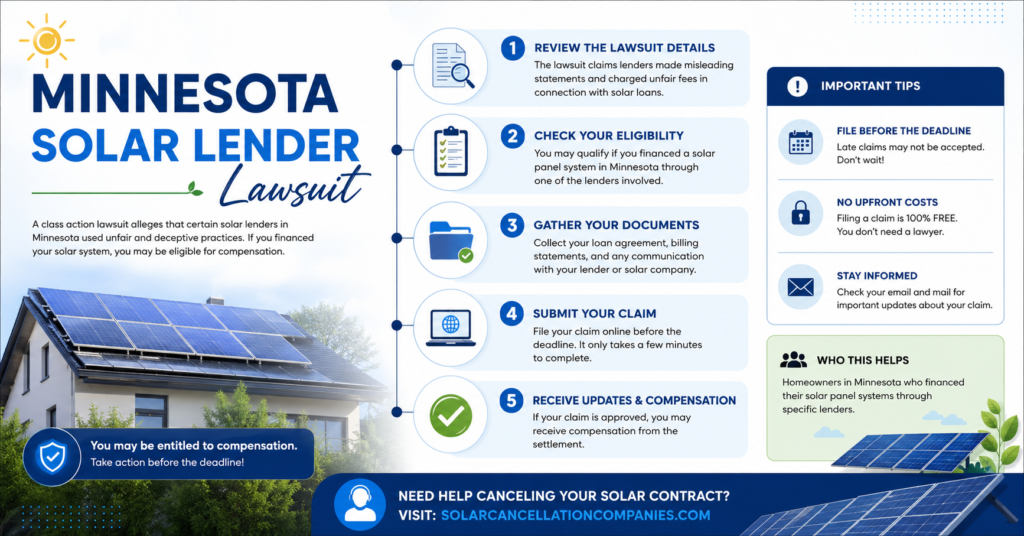
You may be affected if you financed solar panels between 2017 and 2023 through one of these lenders and noticed:
- Hidden dealer fees folded into your loan.
- A loan balance higher than your quoted system price.
- Promises of low interest that did not match your final terms.
- Sales pitches claiming tax credits would cover most of the cost.
- Pressure to sign quickly without reviewing paperwork.
- Installation delays or an installer who later closed.
If any of this sounds familiar, your loan may include the same hidden fee structure named in the lawsuit.
Understanding the Allegations
The complaint says lenders built dealer fees into the system price rather than disclosing them separately. Sales reps allegedly told buyers the full price only covered equipment and labor. Many customers never learned they could pay cash or find outside financing to avoid the fee.
This matters because Minnesota law requires clear finance charge disclosures. When fees are buried, borrowers cannot compare true loan costs. That is the heart of the solar lender fraud claims in this case.
How the Lawsuit Could Affect Existing Loans
A pending lawsuit does not automatically cancel your loan. Here is what homeowners commonly ask.
Does the lawsuit cancel my loan? Not by itself. Cancellation usually requires a separate action, settlement, or individual dispute.
Should I keep making payments? Yes, in most cases, until you get personalized guidance. Missed payments can hurt your credit even if your dispute has merit.
Can the lender still collect? Generally yes, while litigation continues, unless a court orders otherwise.
What if my installer disappears? This is common. Loan obligations to the lender often continue separately from installer promises, which is part of what borrowers are contesting.
Minnesota Solar Loan Legal Rights
Minnesota consumer protection law gives borrowers real rights, including protection from deceptive trade practices and false advertising. If a lender misrepresented your financing terms, you may have grounds for a complaint or claim.
This is not legal advice. If your situation involves large sums or fraud concerns, consider speaking with a solar loan attorney in Minnesota for guidance specific to your contract.
Can You Cancel Your Solar Loan After the Lawsuit?
Goodleap loan cancellation, mosaic loan cancellation, and Dividend cancellation are possible in some situations, though not guaranteed. Cancellation is more likely when there is clear misrepresentation, forged signatures, missing disclosures, or an installer who never finished the job.
Loan cancellation differs from contract cancellation. Canceling your installer contract does not always cancel the loan tied to it, since the lender is a separate legal party.
What Minnesota Borrowers Should Do Next
- Locate your full solar contract and loan agreement.
- Compare your quoted system price to your actual loan principal.
- Write down every promise made during the sales pitch.
- Continue payments while you investigate, unless advised otherwise.
- Gather supporting documents.
- File a complaint with the Minnesota Attorney General if you spot the same fee pattern.
- Speak with a consumer attorney or solar dispute specialist before signing anything new.
Documents Needed for a Solar Loan Dispute
Save these before contacting anyone:
- Solar contract and financing agreement.
- Emails and text messages with the installer or lender.
- Payment records and loan statements.
- Installation photos and completion paperwork.
- Utility bills before and after installation.
- Original sales materials or savings estimates.
How to Report Solar Financing Problems in Minnesota
You can file a Minnesota attorney general solar complaint directly through the AG’s consumer complaint process. You can also file with the Consumer Financial Protection Bureau or the Better Business Bureau. Reporting helps regulators track patterns, even if it does not resolve your case immediately.
Who Is Responsible?
Responsibility often splits between parties. The installer typically handles sales pitches and workmanship. The lender funds the loan and sets repayment terms. Manufacturers cover equipment defects. Understanding which party made which promise helps target your dispute correctly.
GoodLeap vs Mosaic vs Dividend Finance
All three companies face similar allegations involving hidden dealer fees and misrepresented savings. GoodLeap’s average fee runs near 19 percent per loan. Mosaic’s average sits closer to 17 to 18 percent. Dividend loans, now tied to Fifth Third Bank, face the same usury and disclosure claims. Complaint patterns look nearly identical across all three lenders.
Solar Loan vs Solar Contract
Your solar contract covers the installer’s promises about equipment and workmanship. Your loan agreement is a separate financial product with the lender. Canceling one does not automatically cancel the other, which is why reviewing both documents separately matters.
Can You Sue a Solar Financing Company?
Individual borrowers can pursue arbitration or, in some cases, a lawsuit, depending on their contract terms. Many solar contracts require arbitration rather than court. The Attorney General’s case is separate from any individual claim you might file, though it can support your position.
Solar Loan Dispute Timeline
Most disputes follow a similar path. Early steps include gathering documents and filing complaints, which can take a few weeks. Investigation and lender response often take one to three months. Settlement or further legal action can extend the timeline several months or longer, depending on complexity.
Will Borrowers Receive Compensation?
Possible outcomes include refunds of hidden fees, adjusted loan balances, or negotiated settlements. Outcomes vary by case, and the state lawsuit’s resolution will shape what broader relief becomes available.
Mistakes That Can Hurt Your Case
- Stopping payments without guidance
- Signing new agreements under pressure
- Throwing away old contracts or emails
- Waiting too long to document problems
- Assuming the lawsuit automatically fixes your loan
Solar Financing Fraud Warning Signs
- Fees not itemized separately from equipment cost
- Verbal promises that contradict the written contract
- Pressure to sign the same day
- Savings estimates that seem unrealistic
- Installer who avoids answering direct questions about total loan cost
Frequently Asked Questions
What is the Minnesota solar lender lawsuit?
A state case against GoodLeap, Mosaic, Sunlight Financial, and Dividend Finance over hidden dealer fees.
Can I cancel my GoodLeap loan?
Sometimes, depending on misrepresentation or missing disclosures in your specific contract.
Should I keep paying my loan?
Generally yes, until you get personalized guidance on your situation.
Can I sue the lender?
Individual options depend on your contract, which may require arbitration instead of court.
How long does a dispute take?
Simple complaints may resolve in weeks. Complex disputes can take several months.
Final Thoughts
Every borrower’s situation looks different. Some homeowners will find their loan qualifies for review or cancellation. Others may need to file a complaint and wait for the broader case to progress. Start by pulling your documents and comparing your quoted price to your actual loan balance. That single step reveals more than almost anything else.
If you want a professional review of your solar contract and financing, Solar Cancellation Companies can help you understand your options and next step