

You were told that your solar panels would produce enough energy to almost eliminate your monthly utility bills. But months later, your bills are still high. Your solar system is simply not producing enough power.
This is a common and frustrating problem. When your system fails to hit its targets, you lose real money every month. Most top installers provide a solar production guarantee, but getting solar panel underperformance compensation can be a challenge. For free resources and access to reviewed specialists who handle underperformance disputes, visit Solar Cancellation Companies.
If your installer is ignoring you, this guide will help you hold them accountable.
What Is a Solar Production Guarantee?
A solar production guarantee is a legal promise from a solar company production guarantee. It states that your system will create a specific amount of electricity over a set time. This is usually measured in kilowatt-hours (kWh).
How Solar Production Guarantees Work
Most guarantees last for 10 to 25 years. The company estimates your output based on your roof, local weather, and equipment. If the actual energy falls below a certain level often 85% to 95% of the estimate they must pay you for the gap.
Difference Between Production Guarantees and Solar Warranties
It is easy to mix these up, but they are different:
- Equipment Warranty: This covers physical parts, like a cracked panel or a broken inverter.
- Production Guarantee: This covers the actual energy made. Your parts might work fine, but if the system design is poor, this guarantee protects your wallet.
What Most Solar Companies Promise
Contracts usually guarantee a specific amount of kWh per year. Many use a true-up period every one to three years. If the solar panel output guarantee is not met, the company should pay you for every missing kWh. Understanding what type of agreement you signed affects how that guarantee is enforced, our Solar Contract Type guide explains the differences between a loan, lease, and PPA and how performance guarantees work under each structure.
Signs Your Solar System May Be Underperforming
How do you know if you have a valid solar production guarantee claim? Watch for these red flags.
Electric Bills Are Still High
The clearest sign of a solar system not producing enough power is a high bill. If you are paying for both a solar loan and a large utility bill, your system is failing you.
Solar Monitoring Apps Show Low Output
Check your app every week. If the “Actual Production” is much lower than the “Estimated Production” in your contract, you likely have a performance issue.
Your System Produces Less Energy Than Estimated
Compare your yearly total kWh to the “Year 1 Estimate” in your contract. A gap larger than 10% is a serious sign that something is wrong.
Seasonal Drops vs. Serious Underperformance
Production always drops in the winter. However, if your summer production does not cover your needs when the sun is brightest, you likely have a design flaw.
Common Reasons Solar Panels Underperform
Before you claim compensation for underperforming solar panels, you should know why the system is failing.
- Poor System Design: A salesperson might have put panels in a shady spot just to close the deal.
- Installation Mistakes: Loose wires can cause “leaks” in your energy production.
- Inverter Problems: If your inverter is too small, it cannot handle the power your panels make.
- Shading Issues: New trees or buildings can block the sun.
- Dirt and Maintenance: Heavy dust can lower output by 5% to 10%.
- Weather and Climate: Bad weather is a common excuse companies use to deny a solar underperformance warranty claim.
- Panel Degradation: Panels lose a little power each year, but it should never be more than 1% annually.
How Companies Calculate Your Compensation
Understanding the math helps you avoid a low payout.
Annual kWh Production Targets
Companies look at your Guaranteed kWh. If they promised 10,000 kWh but you only got 8,000 kWh, they owe you for that 2,000 kWh gap.
Weather Adjustment Clauses
Many contracts have a weather hedge. If the year was very cloudy, the company might reduce the amount they owe you.
Performance Thresholds
Most solar performance guarantee explained documents show they only pay if you fall below 90% of the target. If you hit 91%, you might get nothing.
Compensation Formulas
Most companies pay a flat rate, like $0.10 per missing kWh. This is often less than what your utility charges you, so you still lose some money.
How to Prove Solar System Underperformance
To prove solar system underperformance to your installer, you need solid data.
Production Monitoring Reports
Export the data from your solar app. This is the official record of what your system actually did.
Utility Bill Comparisons
Show your “Net Metering” statements. If the utility shows you are buying a lot of power during the day, your panels are not working.
Original Sales Promises
Keep your original brochures and PDFs. If the rep promised “100% offset” but you only see 60%, this is vital evidence.
Documents Needed for a Claim
Gather these items before you call the company:
- Signed Contract: Find the “Performance Guarantee” section.
- Production Estimate: This page shows the 20-year energy table.
- 12 Months of Bills: To show your real power usage.
- App Screenshots: To prove the system was on but not producing enough.
- Communication Logs: Keep a list of every time you called or emailed.
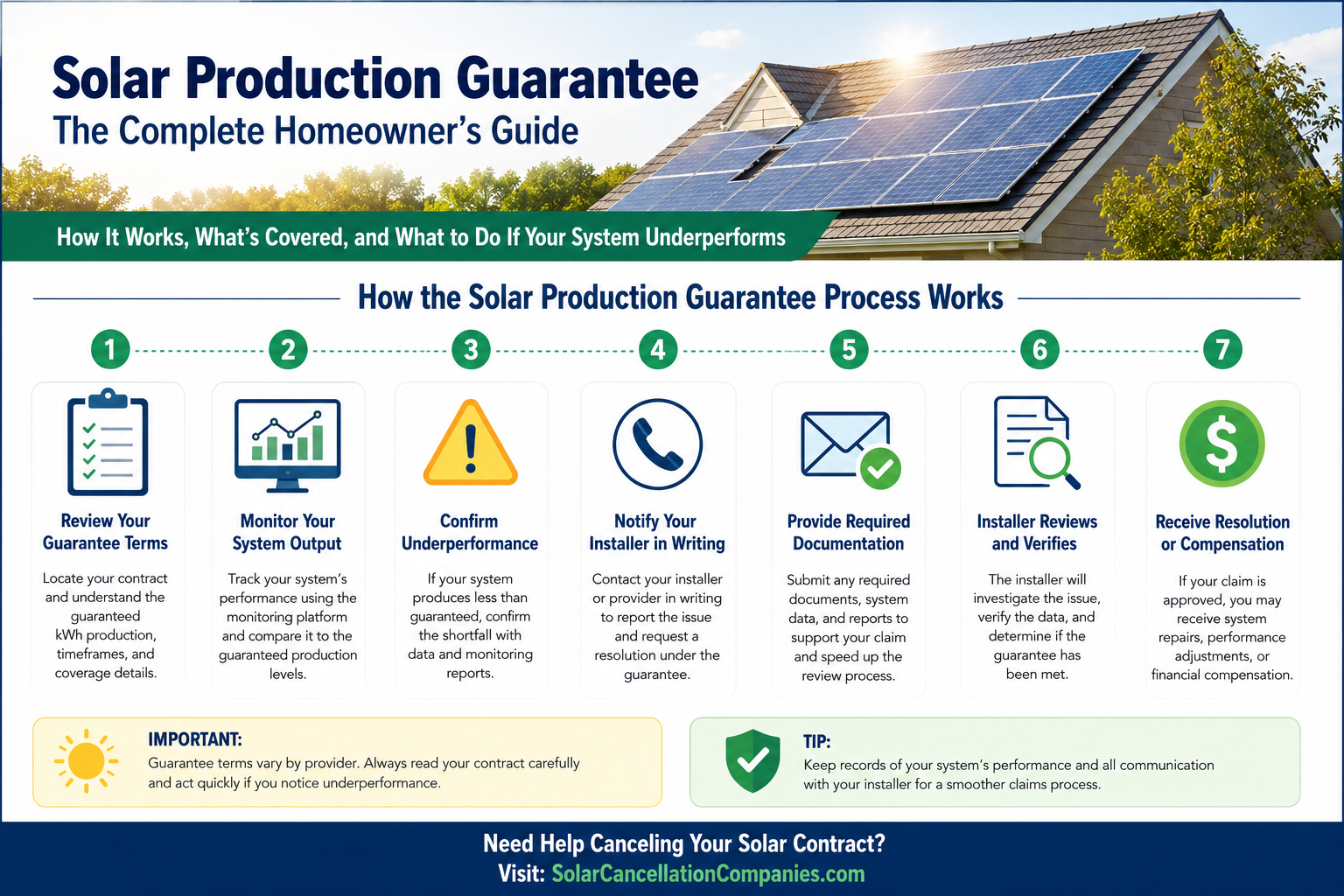
How to File a Solar Production Guarantee Claim
Follow these steps to make sure they don’t ignore you:
- Read Your Contract: Find your “True-Up” period to see when they are supposed to pay.
- Check the Math: Compare the promised output to your actual numbers.
- Gather Evidence: Use the documents listed above.
- Contact the Installer in Writing: Send an email or certified letter to create a paper trail.
- Request an Inspection: Ask for a tech to check the system and a check for lost energy.
- Escalate: If they don’t reply in 30 days, it is time for the next level.
What Happens if the Solar Company Refuses to Help?
If the solar company production guarantee feels like a lie, you have options.
Filing Consumer Complaints
File a report with the Better Business Bureau and your state’s consumer protection office. Our Solar State Laws directory covers the complaint process in every state and which agencies handle underperformance disputes most effectively.
Arbitration Clauses
Most solar contracts force you into “binding arbitration” instead of a regular court. You may need a solar production guarantee lawyer to help with this.
Attorney General Complaints
If a company is misleading many people, the State Attorney General may step in to help.
Can You Cancel a Solar Contract for Poor Performance?
Can you cancel a solar contract for poor system performance? Yes, but it takes work.
Breach of Contract
If the company refuses to pay your compensation or the system design is broken, they may be in material breach of contract. Our Solar Exit Guides cover how breach-of-contract claims have been used to successfully exit agreements with major solar installers.
Misrepresentation
If a salesperson lied about shading or your roof’s power potential, you might have a claim for fraud.
State-Specific Performance Help
- California: State law is very strict about solar disclosures. If your documents don’t match reality, you have a strong case. See our California solar state laws page for the specific complaint channels available.
- Texas: Heat can hurt panel performance. Ensure your installer is local and knows the Texas climate. Review your rights under Texas solar cancellation laws, including the TDLR complaint process.
- Florida: Laws protect you from “unfair trade practices.” If they ignore you, you might get your lawyer fees covered too.
Frequently Asked Questions
What is a solar production guarantee?
It is a promise that your system will make a specific amount of energy. If it fails, they pay you.
Can I sue for underperforming solar panels?
Yes, but check your contract for an arbitration clause first.
What if my system produces less than promised?
Check for shade or dirt first. If it’s clean, file a formal claim with your installer.
How do I prove underperformance?
Compare your app data to the “Estimated Production” table in your contract.
Do solar companies pay my electric bills?
No, but they pay you for the power the panels should have made.
Final Thoughts: Your Next Steps
If your panels are not working as promised, do not wait. Companies often go out of business, making it impossible to collect later.
- Check your contract now for a “Production Guarantee.”
- Download your data for the last year.
- Send a formal notice if there is a gap of 10% or more.
If you feel stuck with a system that doesn’t work, contact Solar Cancellation Companies today for a free no-obligation review of your contract. Whether your system is underperforming, your installer has gone silent, or your guarantee claim has been denied, our team can help you understand your rights and identify your next step.